The AI terminal that puts your deals at the frontier.
Cap Orbit is one AI terminal and shared deal workspace for CRE investment teams. Your team runs the whole deal in it, from screening through underwriting, IC, closing, and asset management, in your own models and formats, so the hours go to conviction, risk, and the market view.
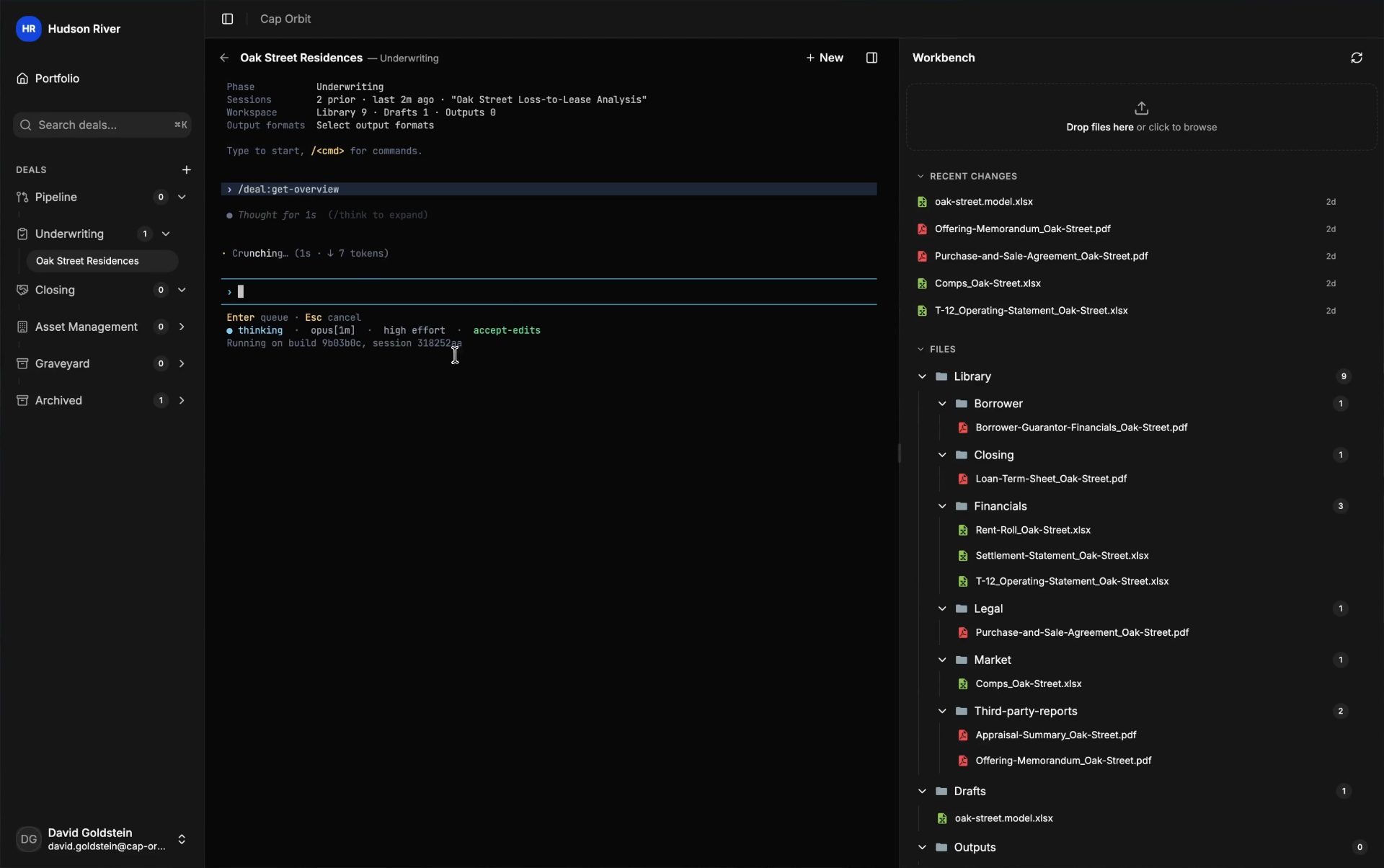
Your investment standard, on every deal.
Decision-grade work, faster
From broker materials to a sourced, committee-ready first read the day the deal lands.
One shared deal record
Everyone works from the same sources, model versions, memo drafts, sessions, and outputs.
Your standard, on every deal
Your models, memo styles, and conventions, applied to all of it.
Your analysts direct every step
The investment decision, pricing view, and committee recommendation stay with your team.
01 · The terminal
Run the whole deal from one AI terminal, built for institutional CRE.
- Run every phase of the deal from one terminal: screening, underwriting, memo drafting, rent roll extraction, operating statement analysis, closing, covenant checks, and portfolio exposure.
- The whole team works from the same deal record, with its files, models, templates, sessions, and outputs in view.
- Keep the working record in one place: source materials, model changes, memo drafts, diligence questions, and decisions move together instead of spreading across chats and folders.
- The output is the work itself: source-traced extracts, live models, memo drafts, closing records, and portfolio reads in the firm’s format.
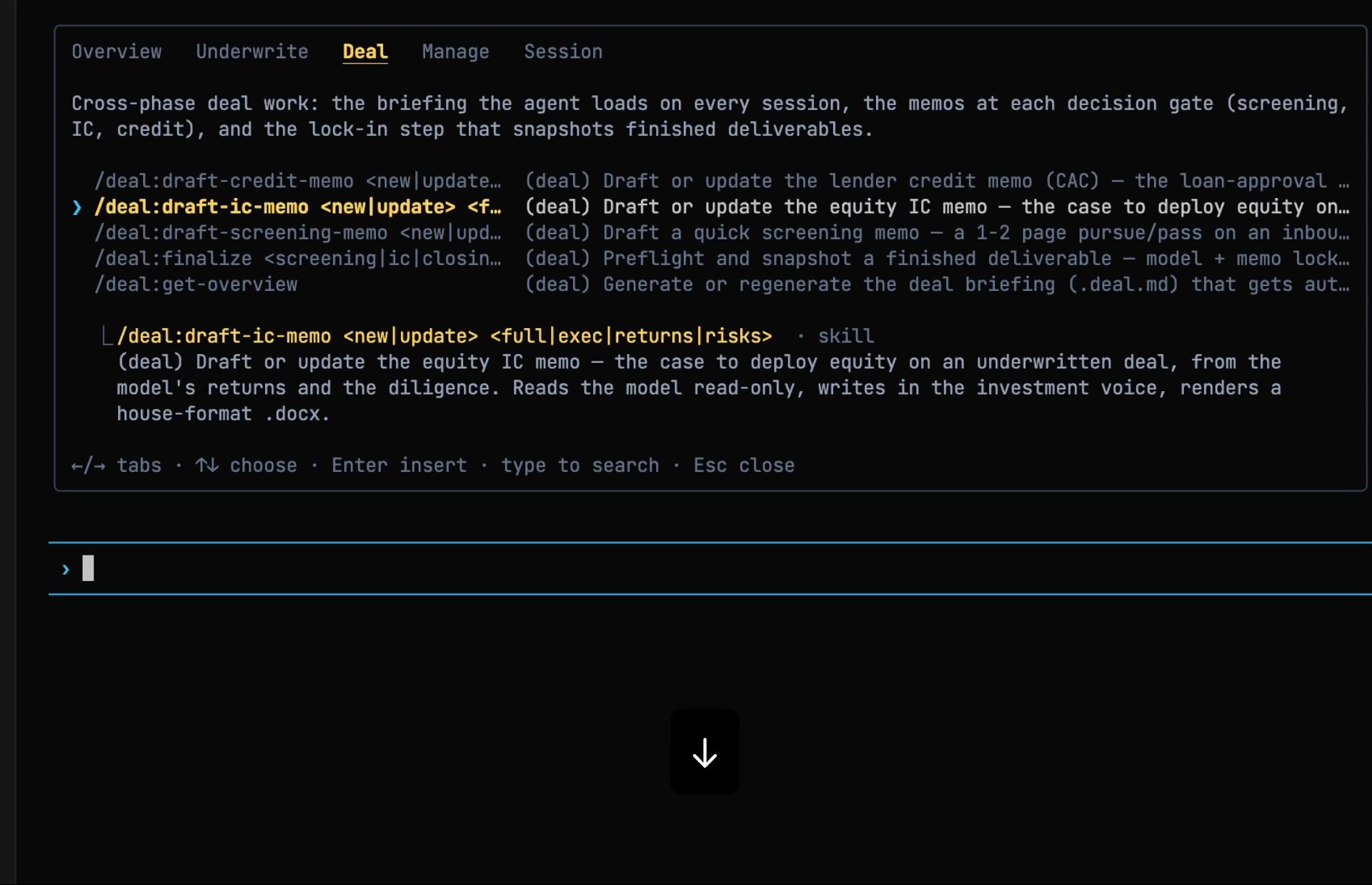
Fig · A command for every phase of the deal
02 · Conviction
Go from teaser to a first read in an afternoon.
- Hand the terminal a teaser, OM, model, rent roll, T-12, or lender materials and it opens the deal the moment it lands.
- The team asks direct questions, runs commands, extracts facts, and compares assumptions in one place, and a sharper first read takes shape fast.
- The investment view forms early: major risks, return drivers, source materials, and open diligence items in view before the process accelerates.
- Focus on the deals that deserve it, and carry a better-supported point of view into pricing, IC, and partner discussions.
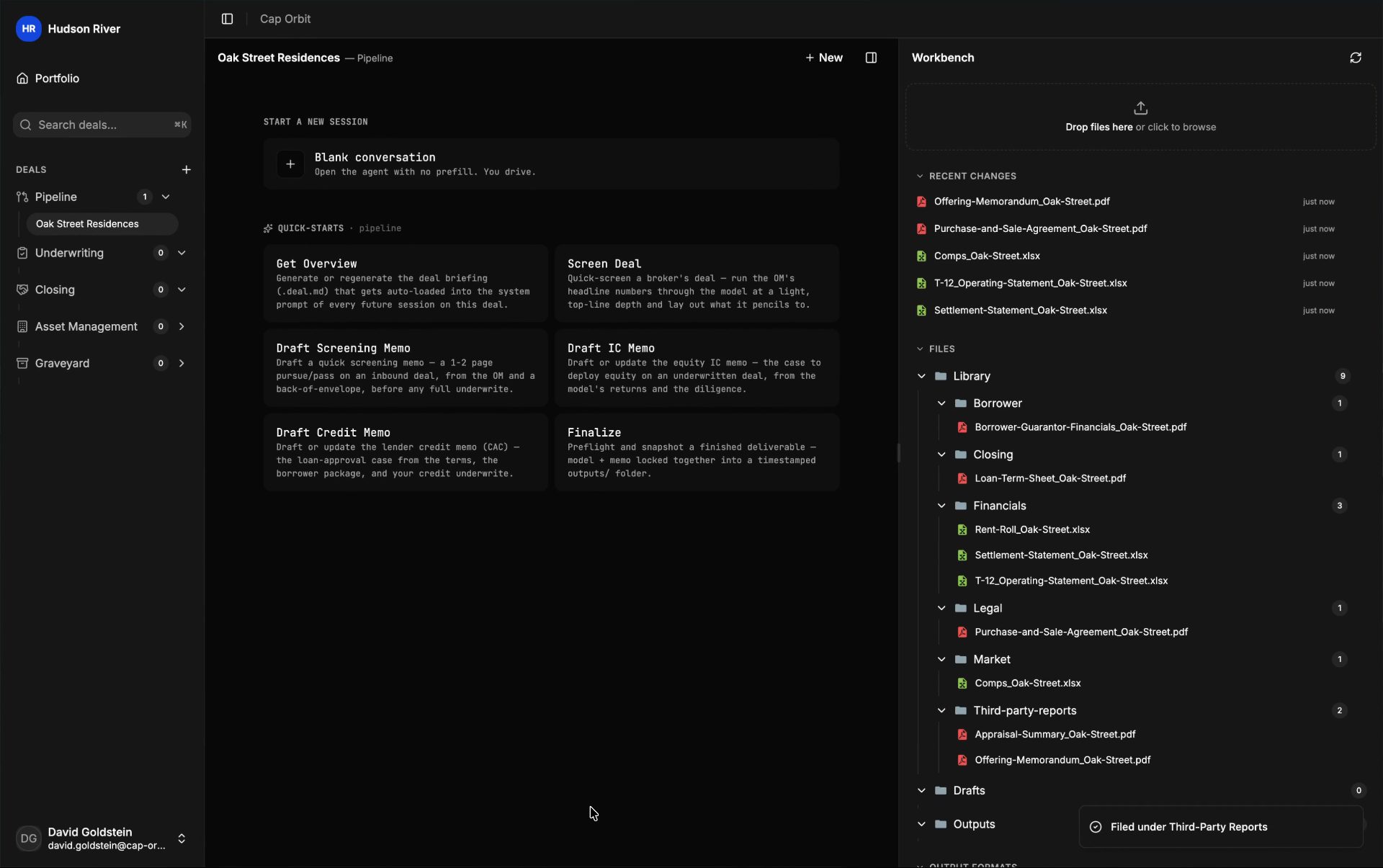
Fig · The deal, open the moment it lands
03 · Capacity
Go deeper on every deal, and run more of them.
- Every analyst commands an AI terminal that reads source materials, builds and revises models, drafts memos, extracts operating data, and answers deal-specific questions.
- The team spends its time on judgment, assumptions, risk, comps, market view, and sponsor quality, while the document reading and production run in the terminal.
- Evaluate more deals in earnest at the same underwriting standard.
- New analysts produce at the firm’s standard from day one, working from its templates, prior work product, and deal workflows.
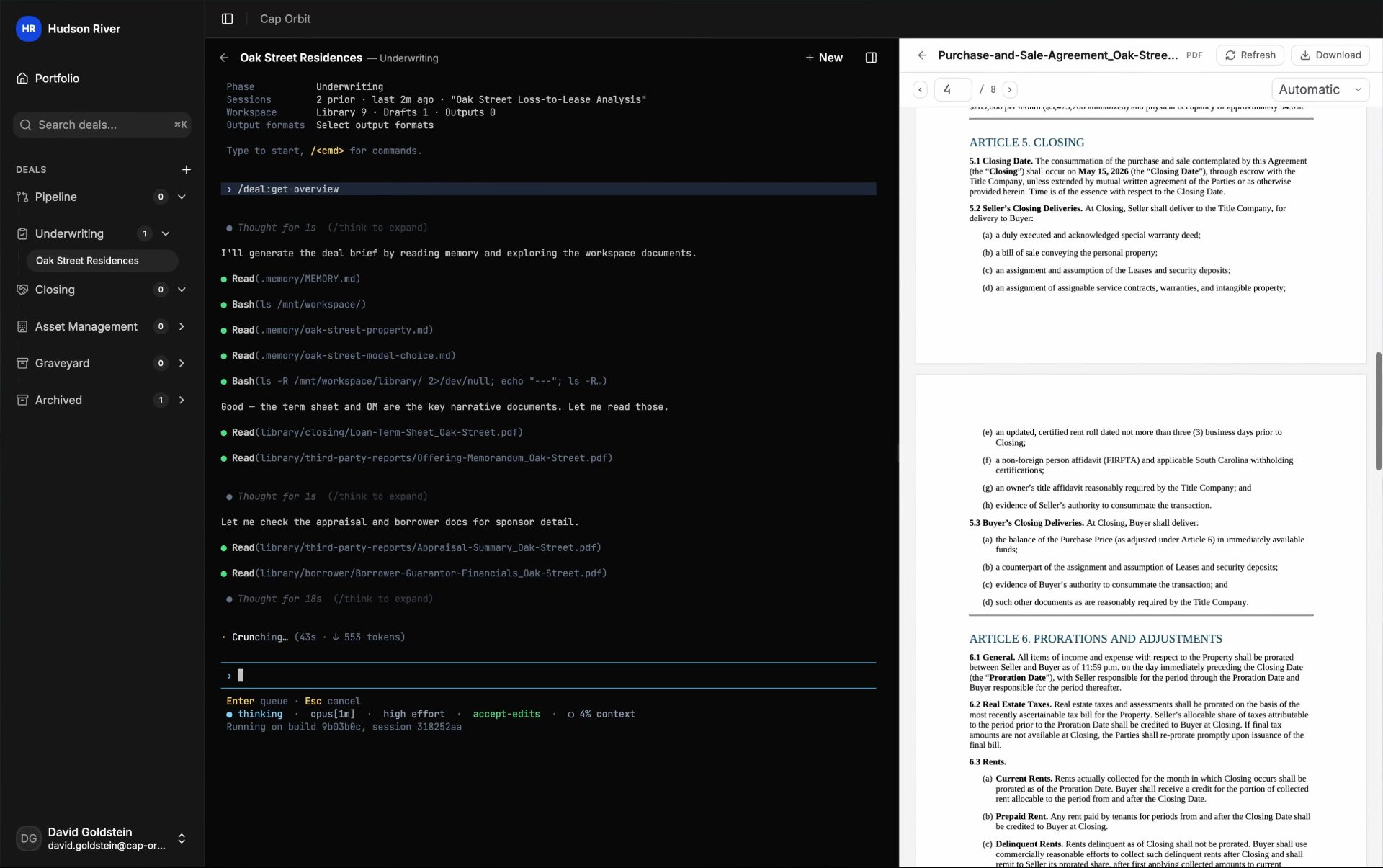
Fig · One terminal for the whole deal
04 · House style
Produce work in your firm’s own models, memos, and formats.
- Attach the firm’s model templates, memo templates, and output formats, and the work is built inside them.
- The team opens work product in the formats it already uses, with the firm’s structure, language, units, and number treatment intact.
- Every deliverable carries the firm’s language, structure, assumptions, and committee expectations.
- Apply the house standard the same way across analysts, offices, strategies, and deal volume.
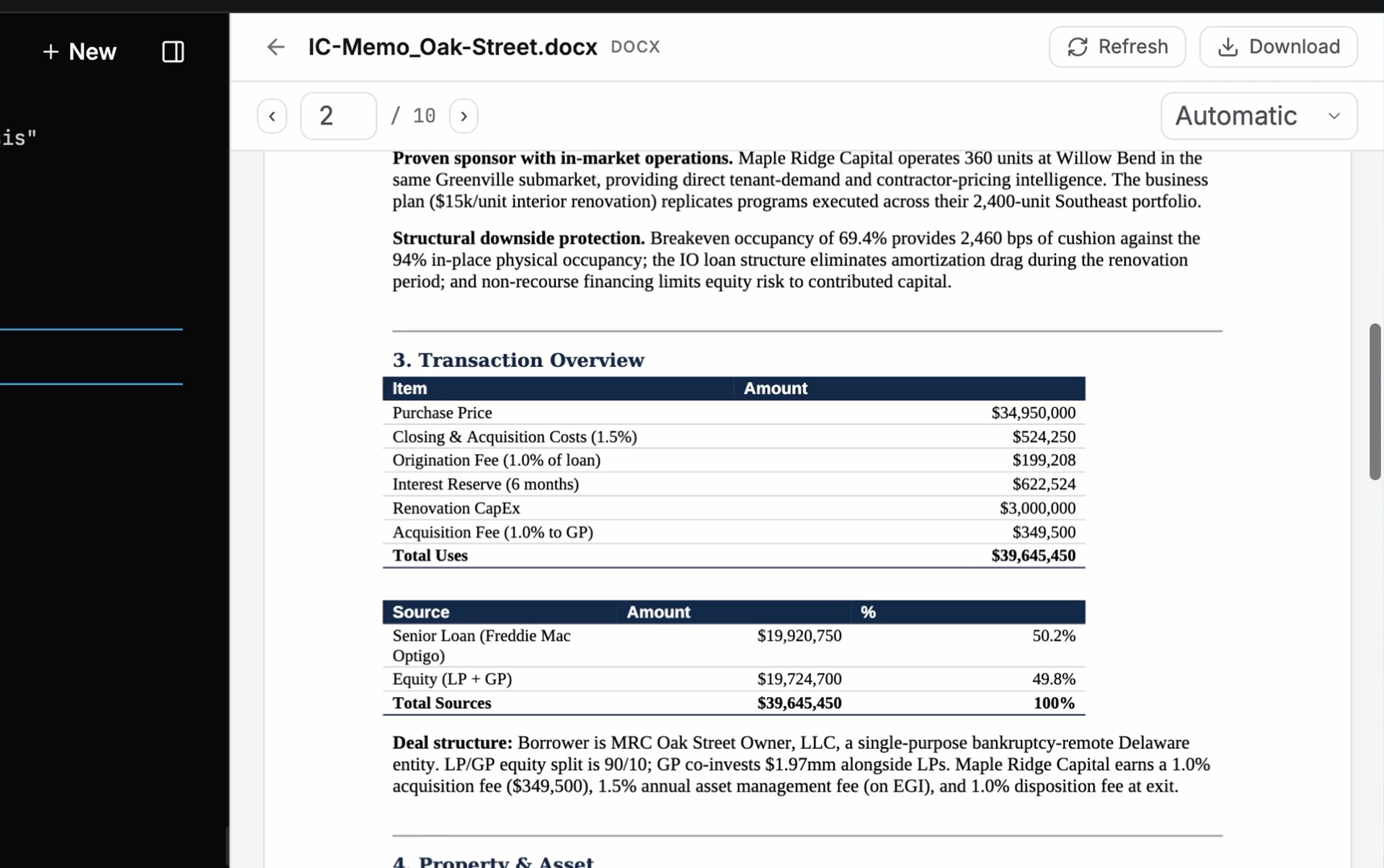
Fig · Your template, your house format
05 · Control
Keep the investment work in the team’s hands.
- Start from the document, model, template, prior draft, or open question that matters.
- Cap Orbit carries the production work; the team sets the assumptions, risk view, pricing position, and recommendation.
- Decision-makers see cleaner committee materials, risks surfaced earlier, and faster iterations.
- Facts, assumptions, drafts, and supporting materials stay together, so the investment judgment has the full record behind it.
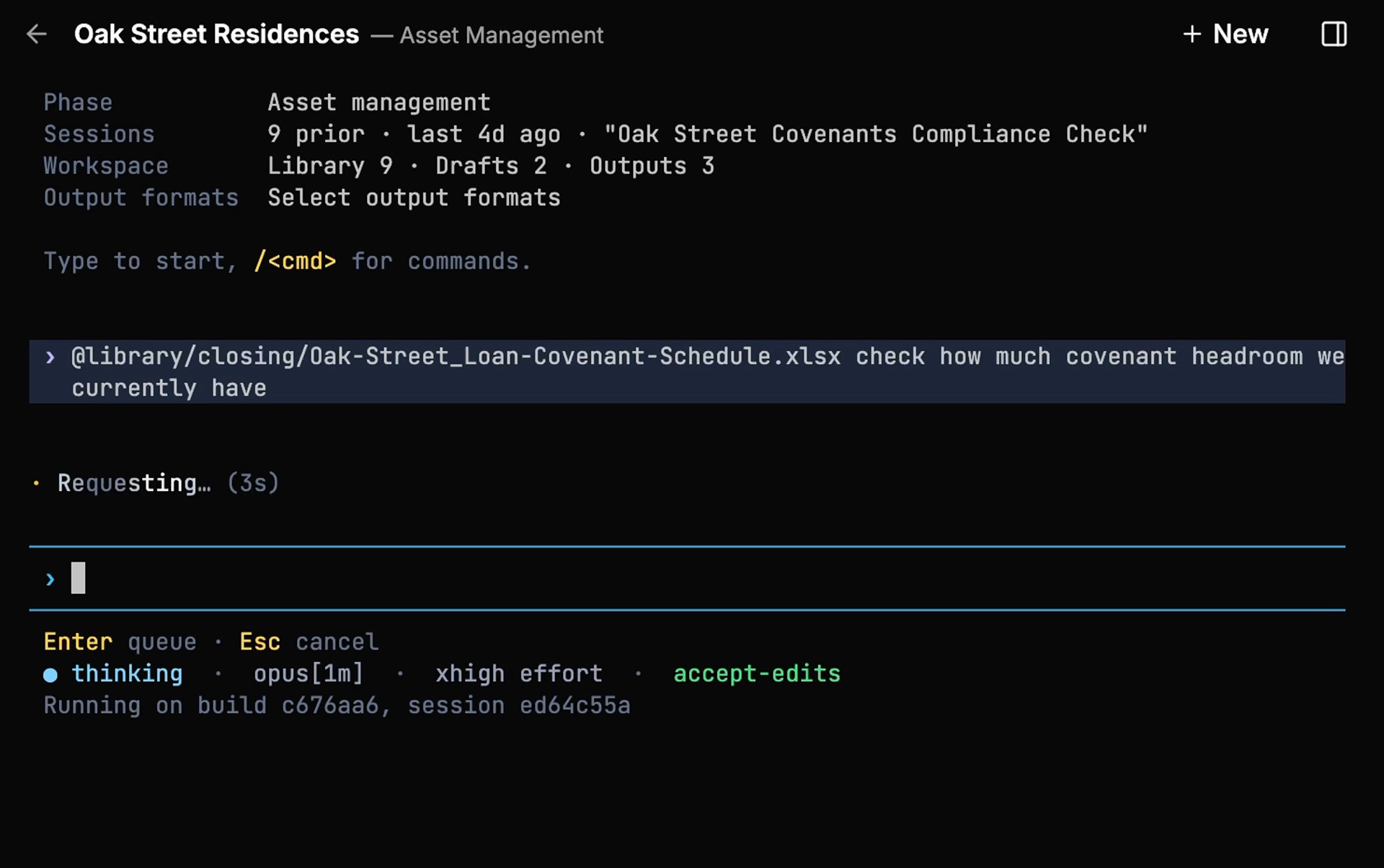
Fig · However the team wants to start
06 · Fit
Keep the firm’s process at the center.
- Cap Orbit fits around the firm’s existing process, keeping the team’s house standard at the center of the work.
- The team’s model templates, memo styles, deal workspace, output formats, and review patterns shape what comes out.
- Each analyst uses the terminal where it helps most: pulling operating data, drafting memos, testing assumptions, or managing closing workstreams.
- The firm gains leverage on live deals without asking the team to work like someone else.
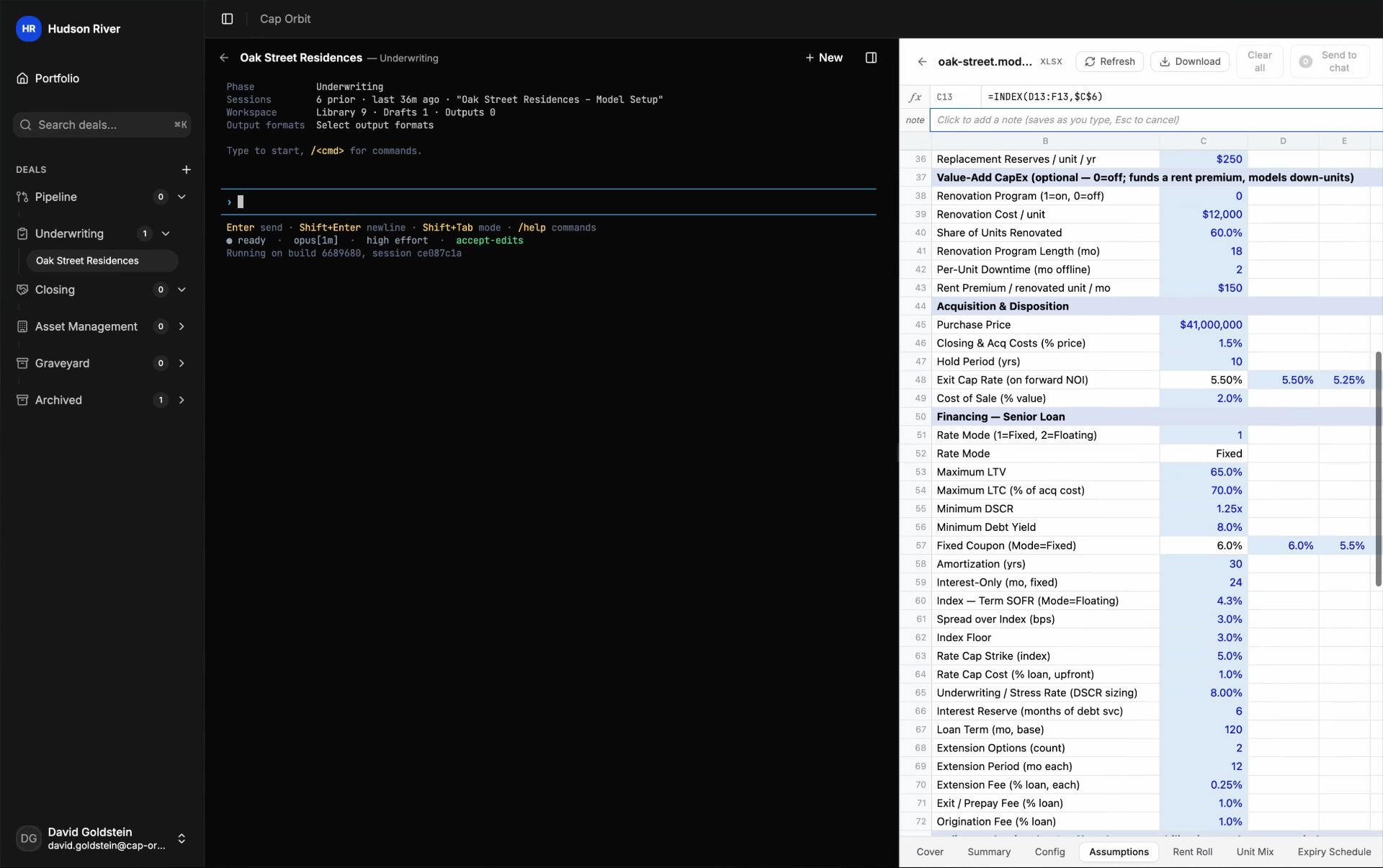
Fig · Built around how you already work
07 · Coverage
Model every major CRE strategy, from stabilized multifamily to ground-up development.
- Underwrite across multifamily, build-to-rent, student and seniors housing, office, retail, industrial, medical office, life-science, hotel, self-storage, data center, and more.
- Size to the binding debt constraint and price Base, Upside, and Downside, whether the deal is stabilized cash flow, lease exposure, a development budget, a capex plan, financing terms, or operating assumptions.
- Every deal opens with a starting point that already reads CRE documents, metrics, and investment questions.
- Apply one standard across strategies while keeping the nuances that matter by asset class.
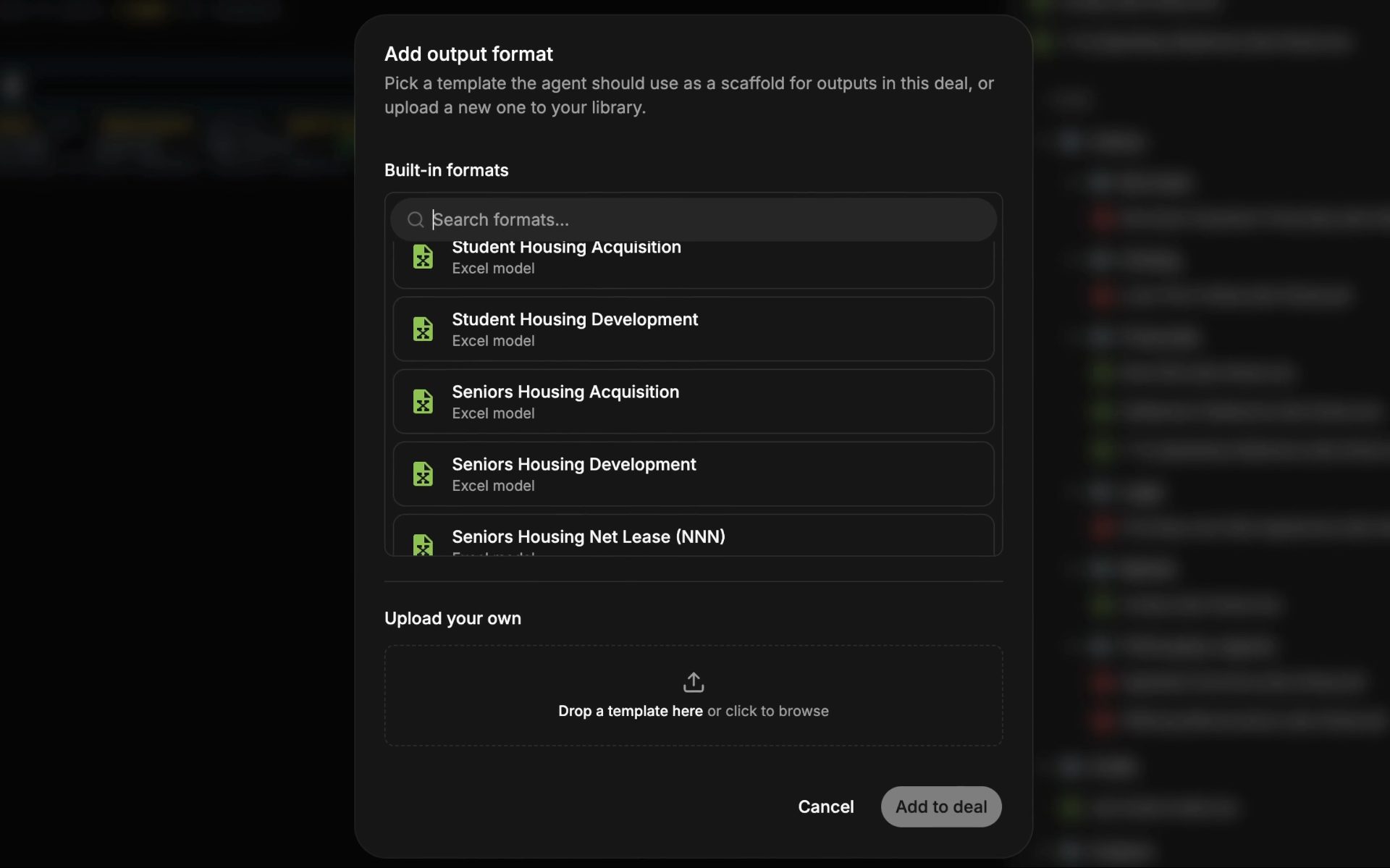
Fig · Coverage across the CRE map
08 · Lifecycle
Carry the deal from first look to closing to asset management.
- One deal record runs across pipeline, underwriting, closing, asset management, and portfolio review.
- The investment thesis stays connected as the deal evolves: assumptions, diligence findings, memo drafts, model versions, closing materials, and ownership updates.
- After closing, the team refreshes periods, drafts asset management memos, checks covenants, and revisits the original underwriting context.
- The deal record carries the work from “Should we pursue this?” to “Are we executing against the thesis?”
deal · oak-street
Fig · One deal record, first look to ownership
09 · Institutional memory
Build institutional memory across the book, one deal at a time.
- Every deal stays on the record across the months it takes: summaries, outputs, assumptions, source materials, and final records.
- Reuse prior work when a similar asset, sponsor, market, tenant, capital structure, or risk pattern shows up again.
- Today’s deal connects to prior investment views and portfolio context, so the firm builds knowledge faster across the book.
- Every completed deal, passed deal, and reviewed opportunity becomes a stronger starting point for the next one.
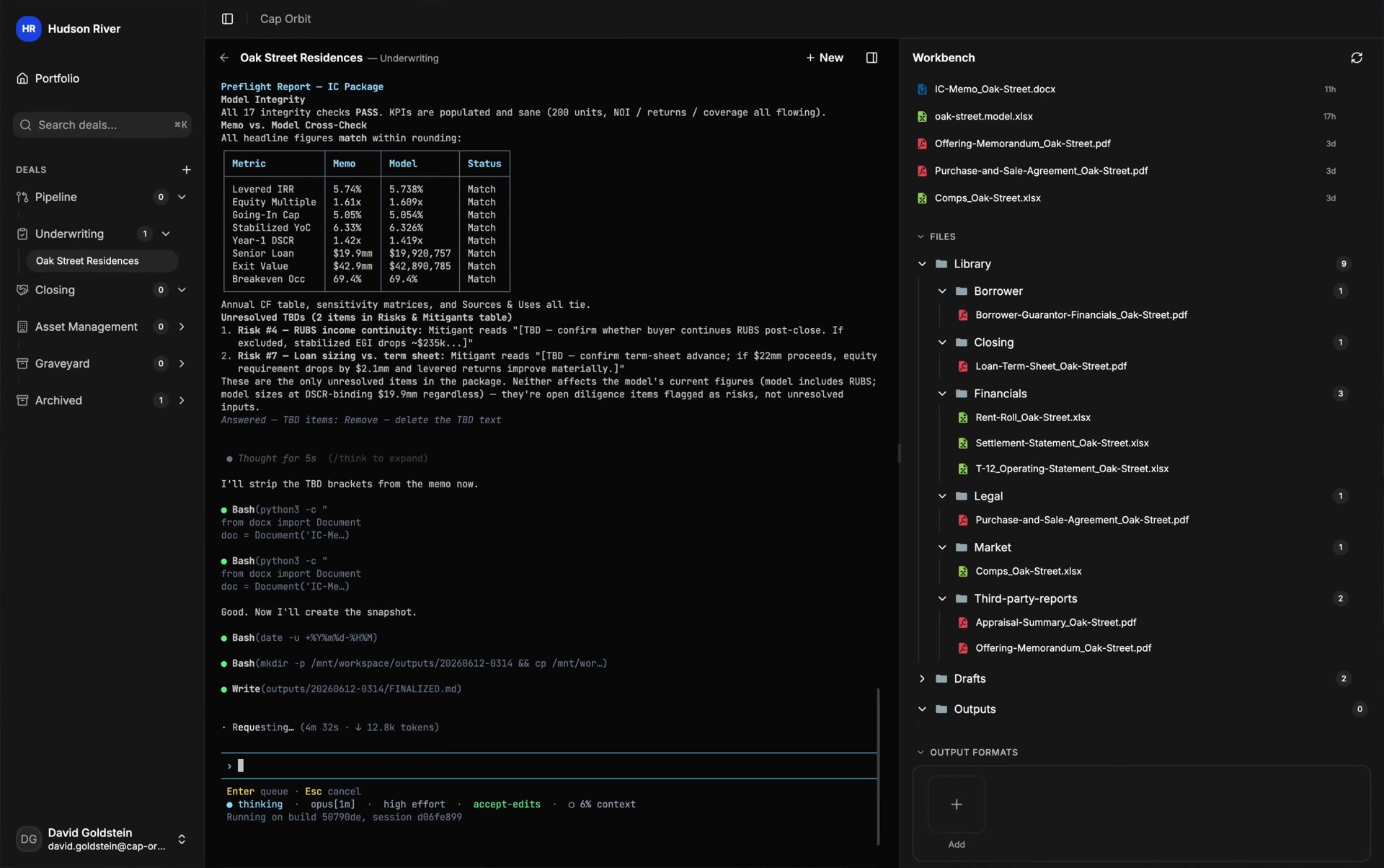
Fig · Every deal, on the record
Private by design, isolated per firm.
Your files, models, and memos are yours alone and are not training data. On Pro, Cap Orbit runs the infrastructure for you. On Enterprise, it runs in a cloud account you own, with your keys and your SSO.