The AI terminal for your next deal. And every step after.
Cap Orbit brings your CRE team together around one AI terminal and one shared deal record. Build the model, shape the memo, and edit the deck in one place. Work in the same sheet together, at the same time. Keep your own models and formats through every phase. Spend your time understanding the deal and deciding what comes next.
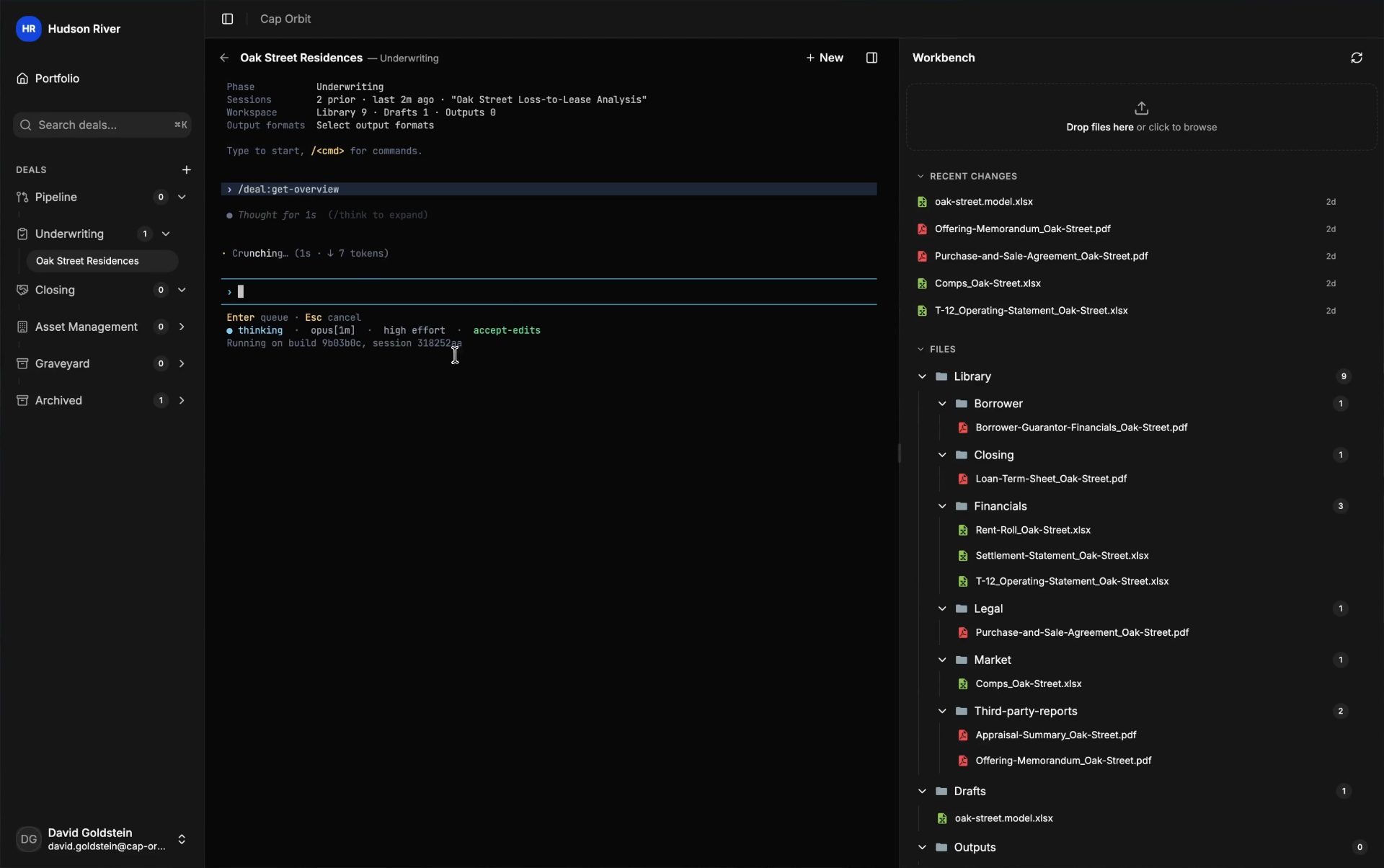
Your investment standard, on every deal.
Decision-grade work, faster
From broker materials to a sourced, committee-ready first read the day the deal lands.
One shared deal record
Everyone works from the same sources, model versions, memo drafts, sessions, and outputs.
Your standard, on every deal
Your models, memo styles, and conventions, applied to all of it.
Your analysts direct every step
The investment decision, pricing view, and committee recommendation stay with your team.
01 · The terminal
One AI terminal. Every stage of the deal.
- Use commands for work you repeat. Ask for the rest in plain English.
- Extract a rent roll or draft a model. Review the memo and work through closing. Stay in the same terminal.
- Your model, memo, and deck. Built in your firm’s own format.
- Every figure traces to the line it came from.
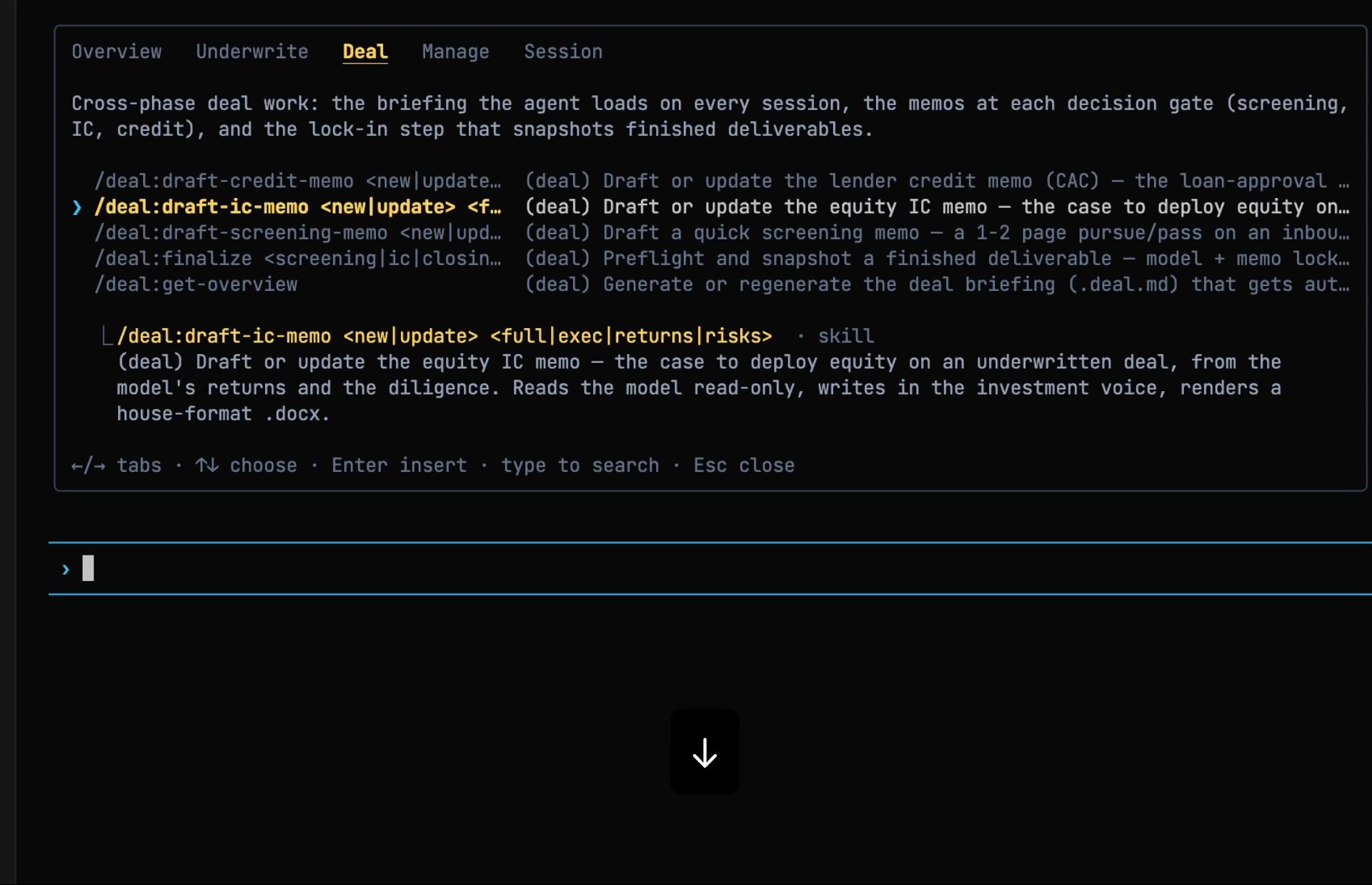
Fig · The command menu, open on the deal
02 · Conviction
A teaser this morning. A first read this afternoon.
- Upload the teaser and supporting files, or link their folder. Open the deal as soon as it lands.
- Ask a question or compare two sets of assumptions. Build a first read that afternoon.
- See what drives the returns and where the risks lie. Sources and open diligence items are there before the pace picks up.
- Give promising deals the time they deserve. Bring a supported view to pricing and IC.
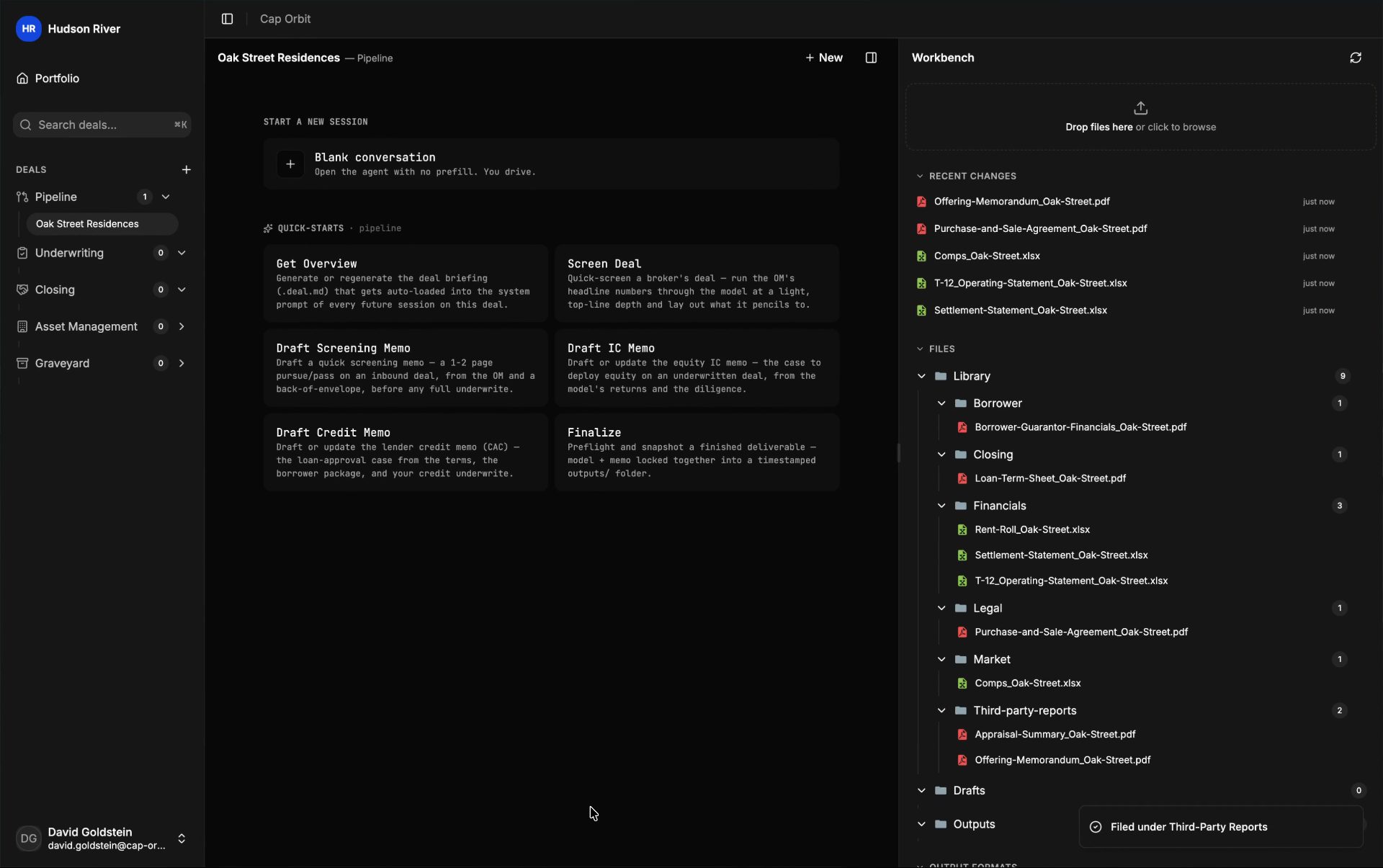
Fig · The deal, open the moment it lands
03 · Capacity
More deals. More time to understand each one.
- Give every analyst a terminal that reads sources and builds models. It drafts memos and answers questions about the deal, too.
- Put your team’s time into the assumptions and the market view. Weigh the risk.
- Use Ask the VP for a senior review at decision points. Give more deals the same scrutiny.
- New analysts start with your templates and prior work. Deal memory helps them meet the firm’s standard from day one.
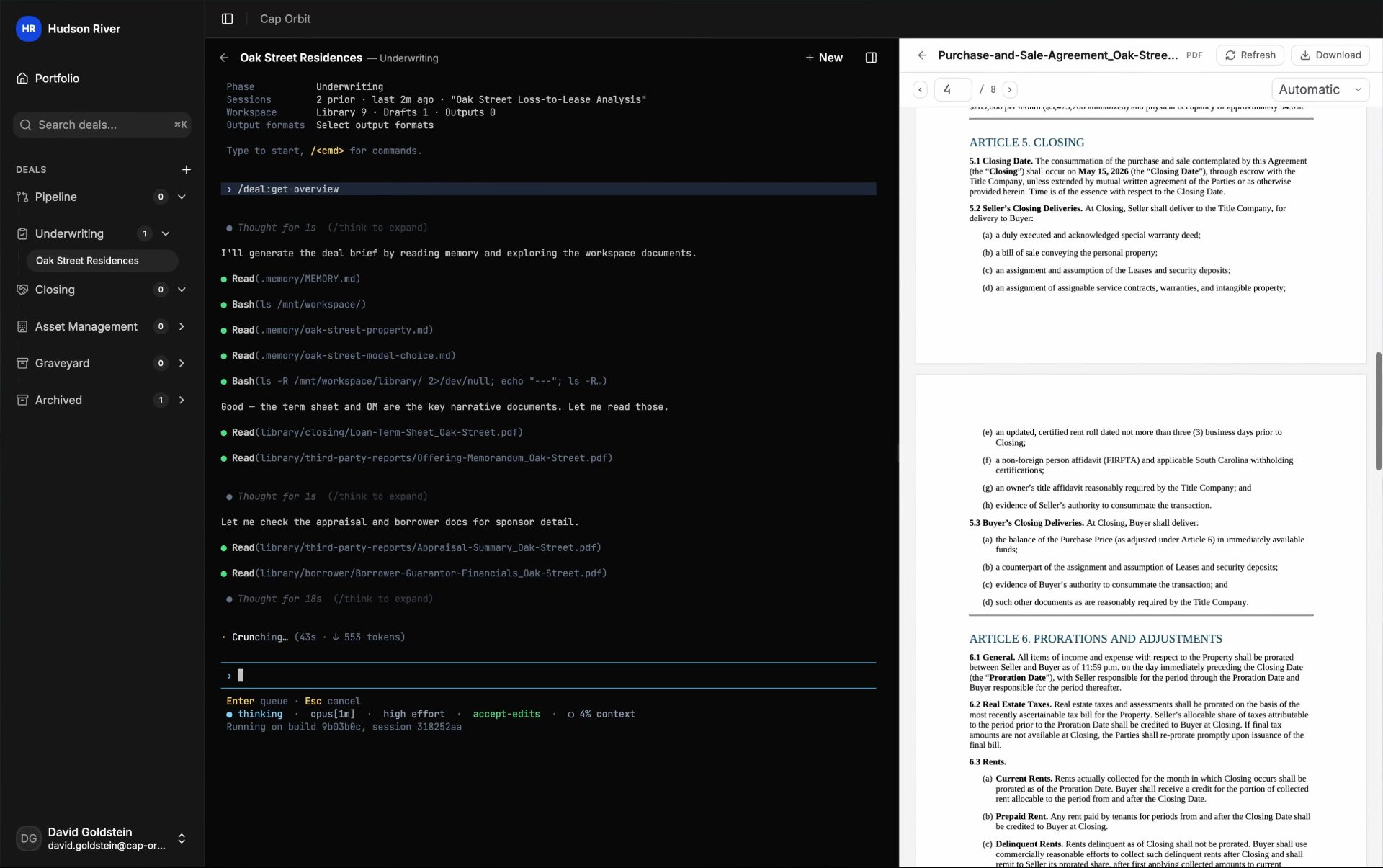
Fig · One terminal for the whole deal
04 · House style
Your models. Your memos. Your firm’s standard.
- Attach the firm’s model and memo templates. The work is built inside them.
- The result opens in the format the team already uses, with the firm’s structure, units, and number treatment intact.
- Pick from a catalog of house models, searchable by sector and strategy, or attach your own. Each one opens cleanly in Excel.
- One standard across analysts, offices, and strategies.
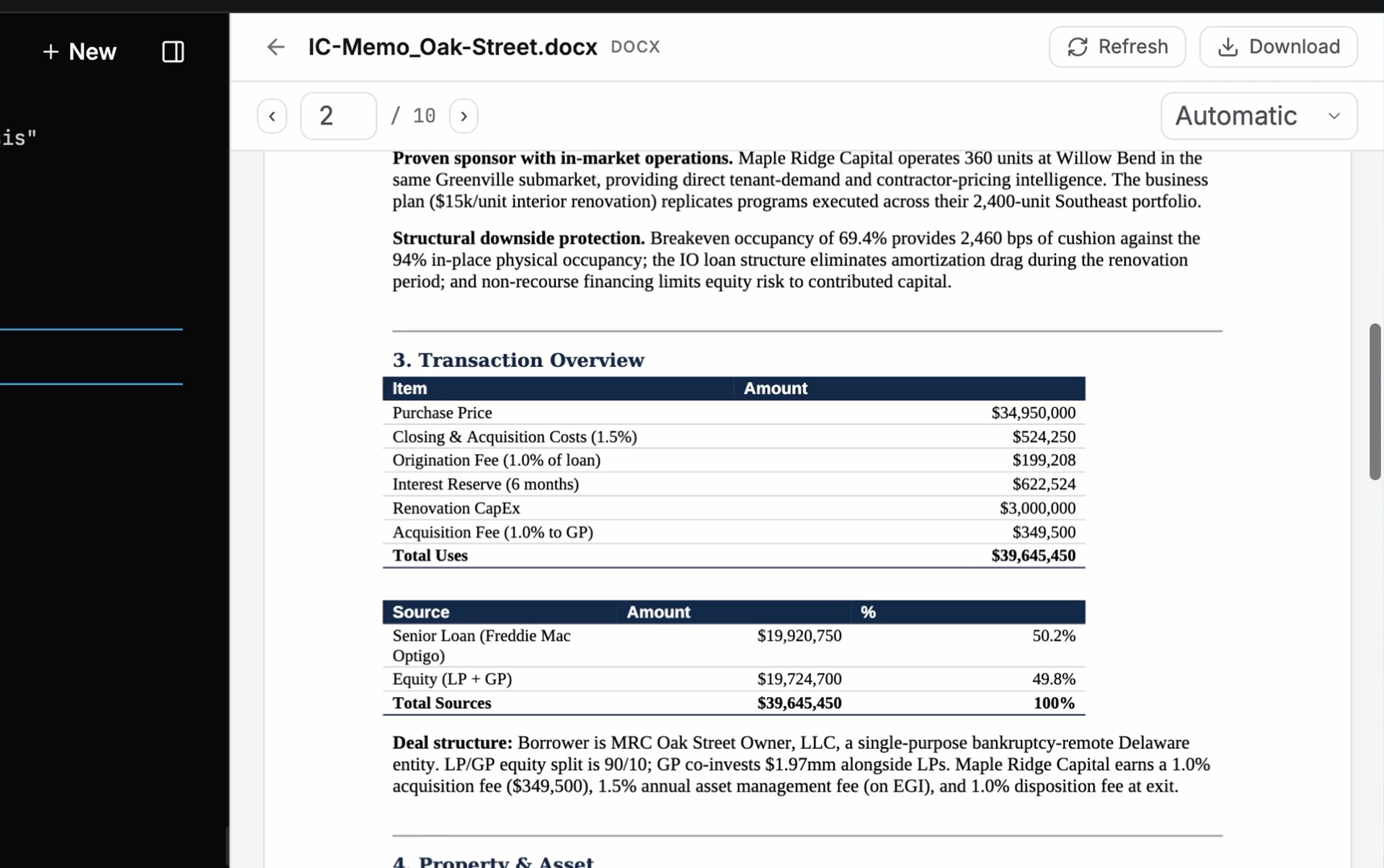
Fig · Your template, your house format
05 · Control
You have the final say.
- Start from a document, a model, a template, or an open question.
- Edit the file the terminal wrote, in place, with a colleague’s cursor in the next column. The next pass builds on what you changed.
- See the current assumption beside the proposed change. Nothing is written until you confirm.
- Your team sets the assumptions and weighs the risk. You own the pricing and recommendation, with the full record behind you.
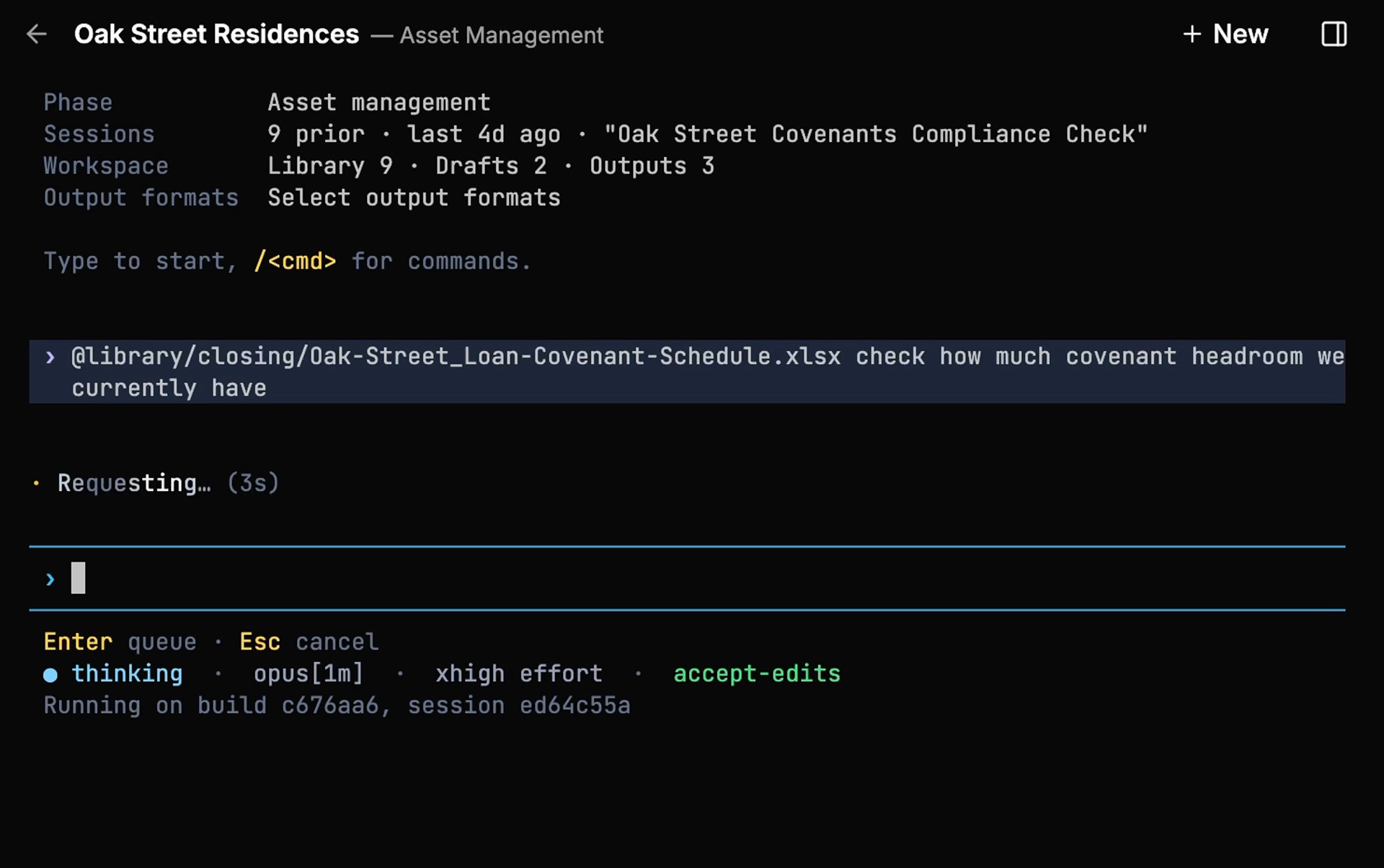
Fig · However the team wants to start
06 · Fit
Built around how your firm works.
- Keep the process your team knows and the standard your firm expects.
- Your templates, memo styles, and review patterns shape what comes out.
- Use the terminal where you need it. Work through operating data, try a scenario, or pick up the memo or closing checklist.
- Save the work you repeat as a command, yours alone or shared with the team.
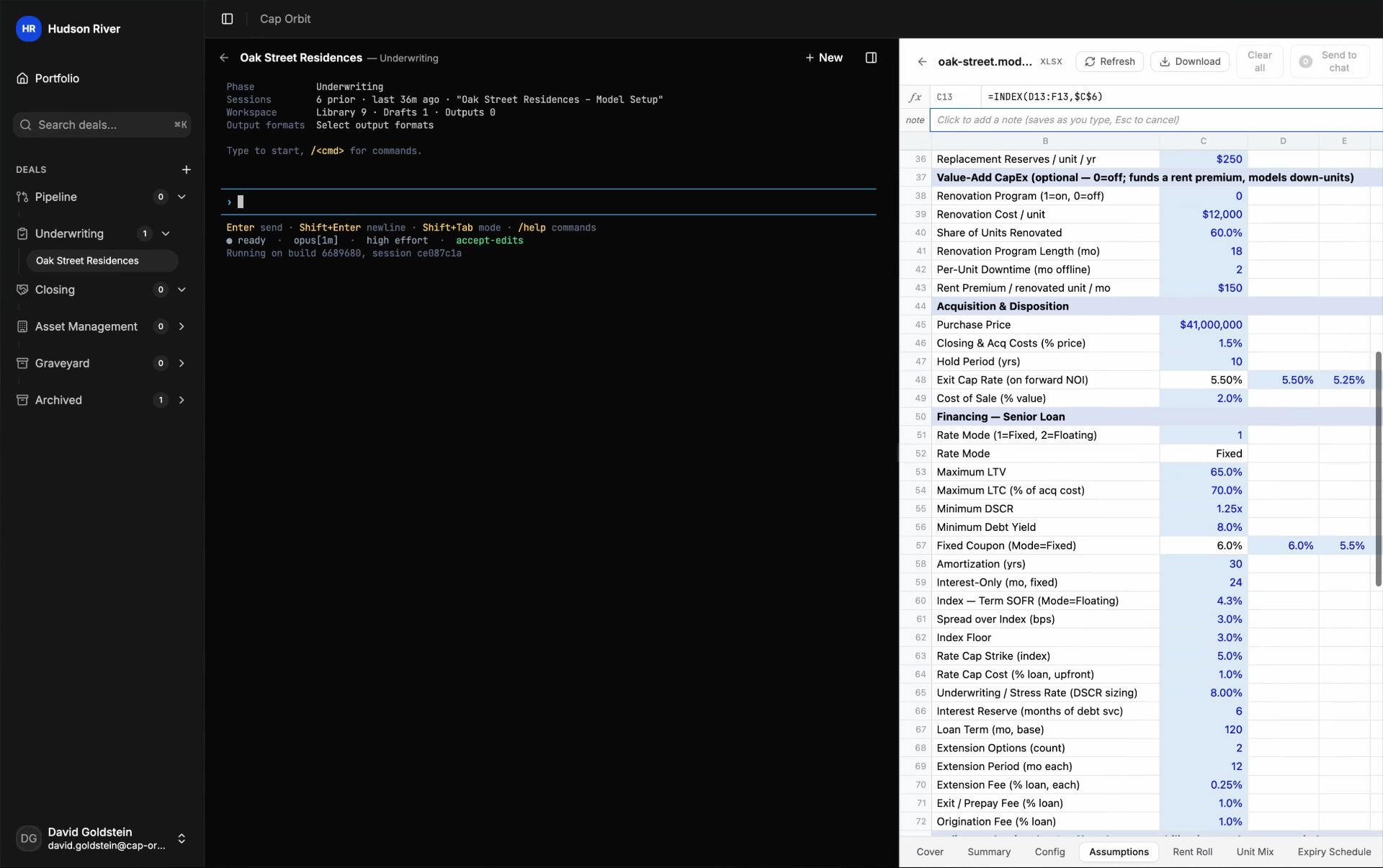
Fig · Built around how you already work
07 · Coverage
Model every major CRE strategy, from stabilized multifamily to ground-up development.
- Multifamily, build-to-rent, student and seniors housing, office, retail, industrial, medical office, life science, hotel, self-storage, data center, and more.
- Size to the binding debt constraint and price Base, Upside, and Downside, whether the deal is stabilized cash flow, a development budget, or a capex plan.
- Every deal opens with a starting point that already reads CRE documents, metrics, and investment questions.
- One standard across strategies, with the nuances that matter by asset class.
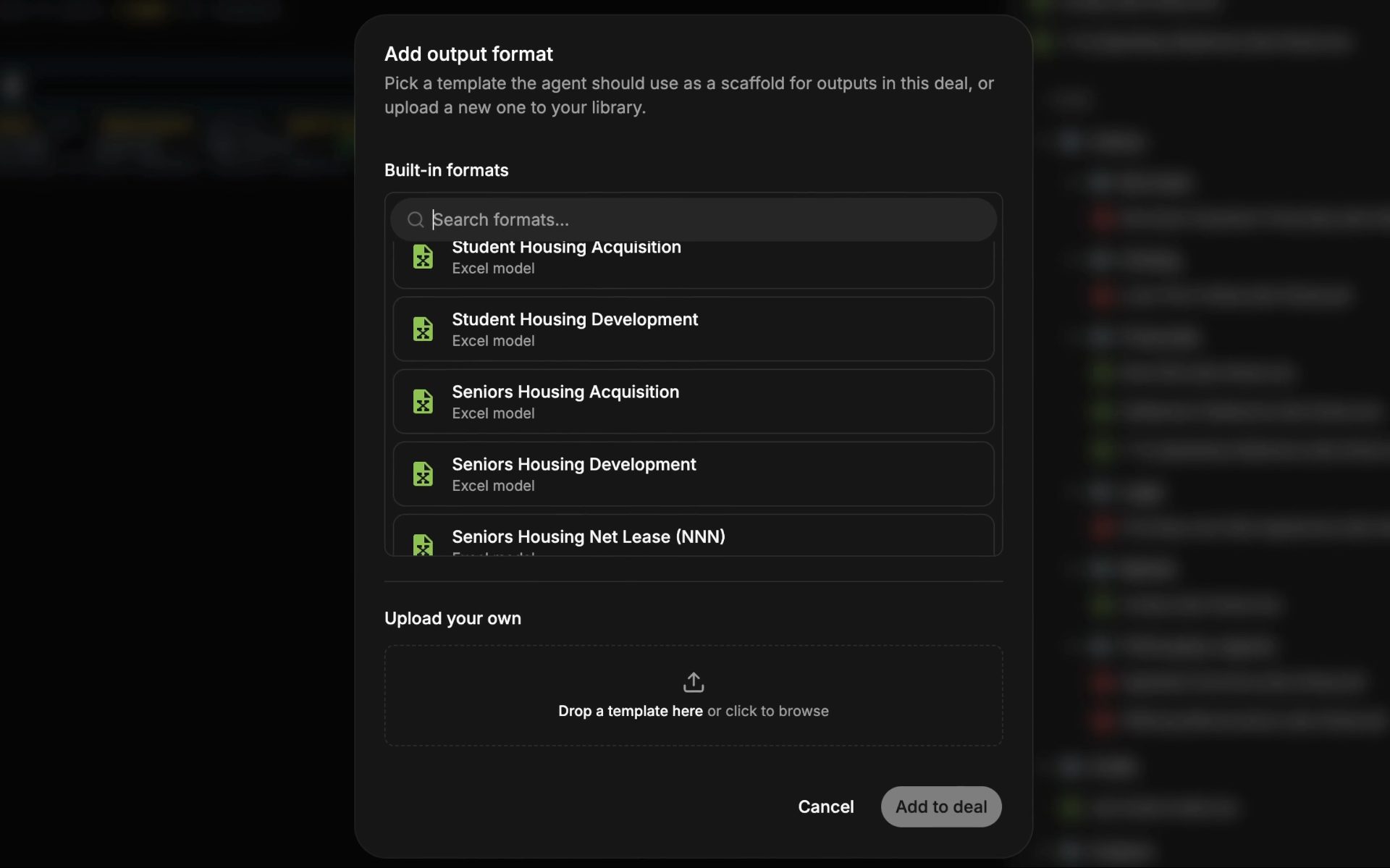
Fig · Coverage across the CRE map
08 · Lifecycle
From first look to ownership. The same deal record.
- Keep one record through pipeline, underwriting, and closing. Carry it into asset management and the portfolio.
- Each phase closes on a dated snapshot. The working model stays live.
- After closing, the asset manager works the period trackers as spreadsheets and tests the covenants against the loan terms.
- The record carries the work from “Should we pursue this?” to “Are we executing against the thesis?”
deal · oak-street
Fig · One deal record, first look to ownership
09 · Institutional memory
The next deal starts with what you learned.
- Keep the sources and assumptions alongside the work they informed. The record lasts through the months a deal takes.
- Link a SharePoint, OneDrive, Dropbox, or Box folder to the deal as its data room. File the broker’s attachment from Outlook. The terminal reads only inside what you linked.
- The next teammate can pick up the facts and decisions, see who is involved, and read the feedback.
- Every completed deal, passed deal, and reviewed opportunity becomes a stronger starting point for the next one.
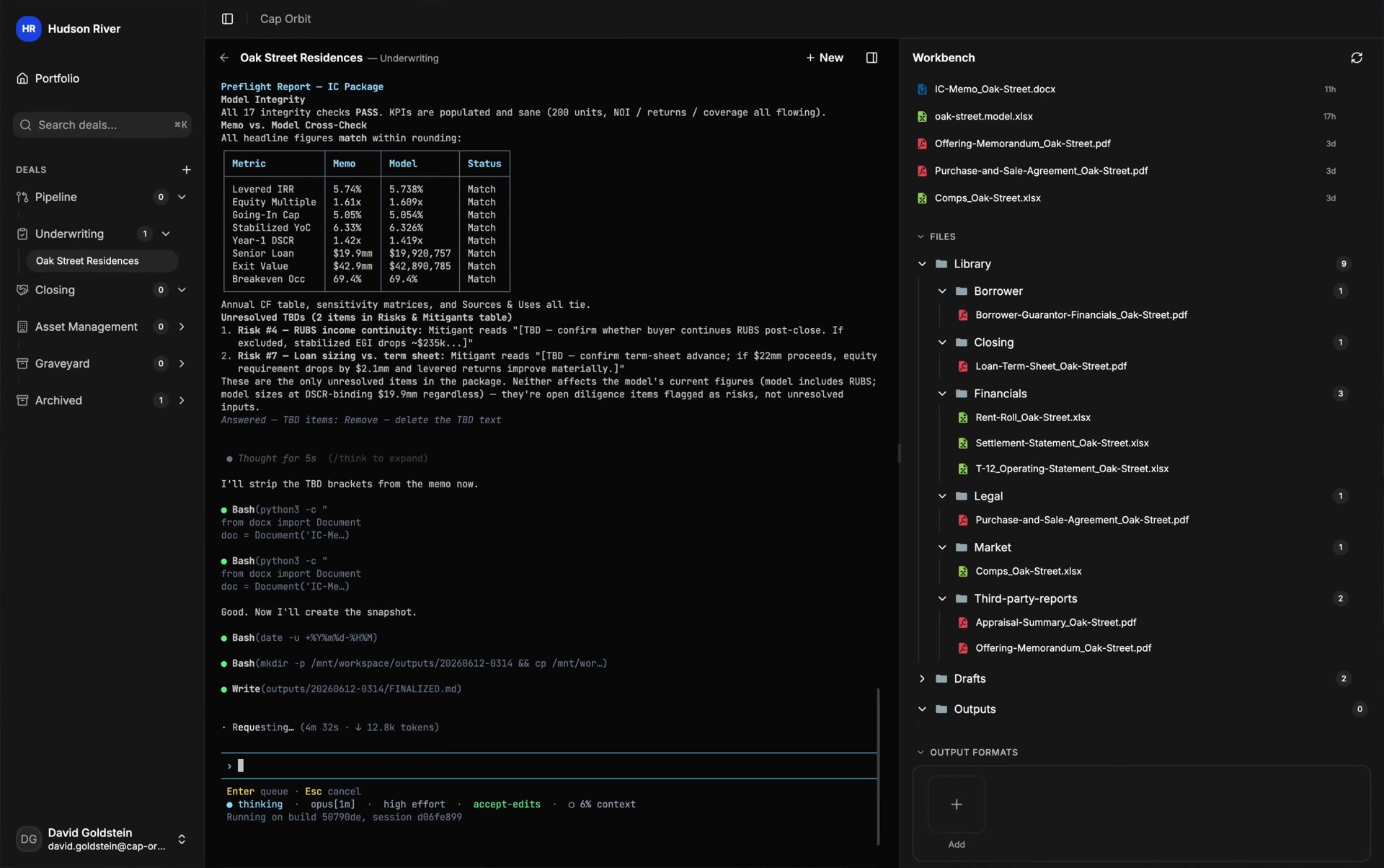
Fig · Every deal, on the record
Private by design, isolated per firm.
Your files, models, and memos are yours alone and are not training data. On Pro, Cap Orbit runs the infrastructure for you. On Enterprise, it runs in a cloud account you own, with your keys and your SSO.