Get to your view while the deal is on the table.
Screen the deal the day it lands. Build the underwrite and take a supported view to committee. Every number has a source. Your analyst directs the work.
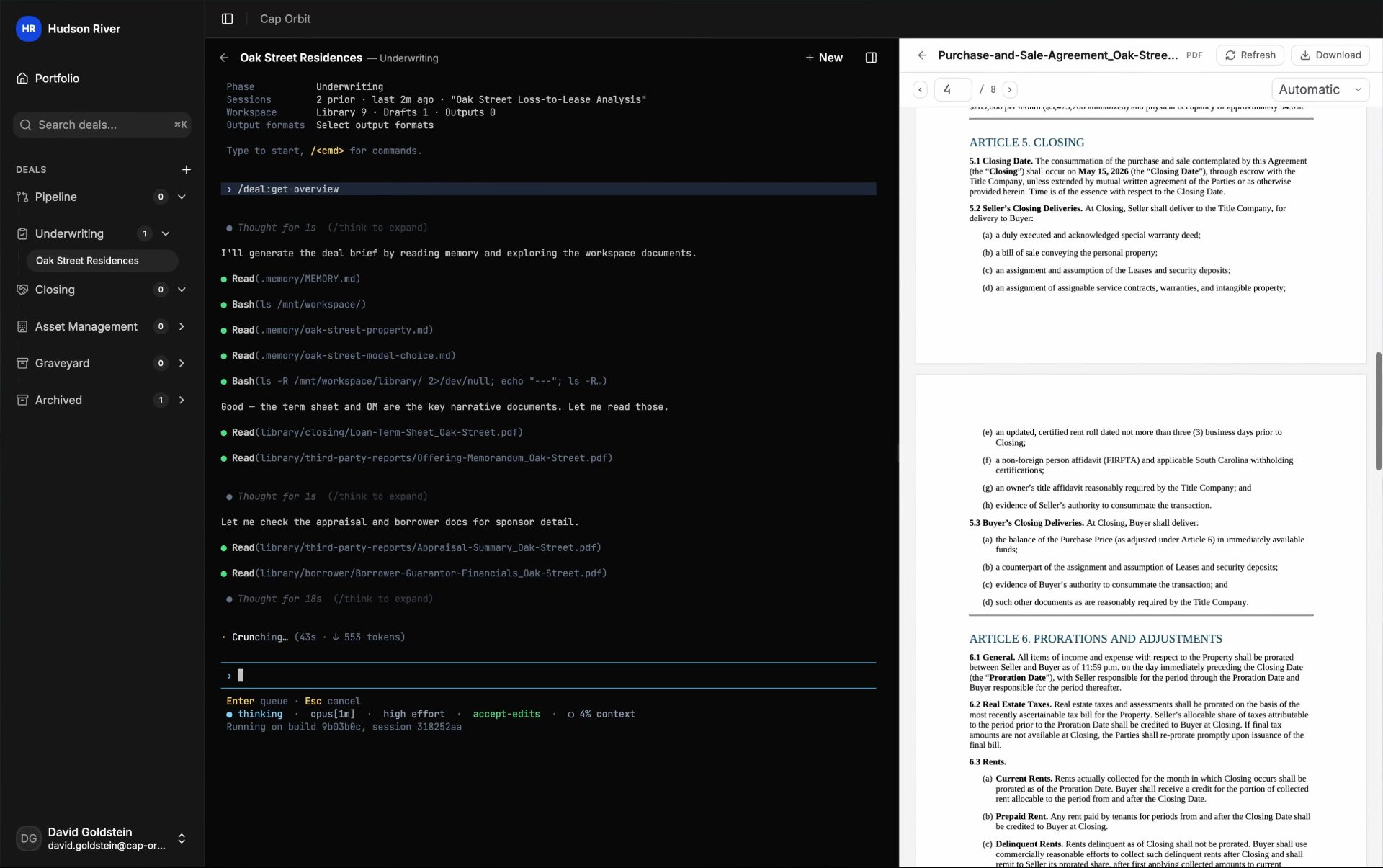
The acquisitions team
The deal lands. Your first read starts.
Find the broker’s package in Outlook and file its attachments, or read it from a linked folder. Get a first pass at going-in cap and levered return, debt yield and price per unit.
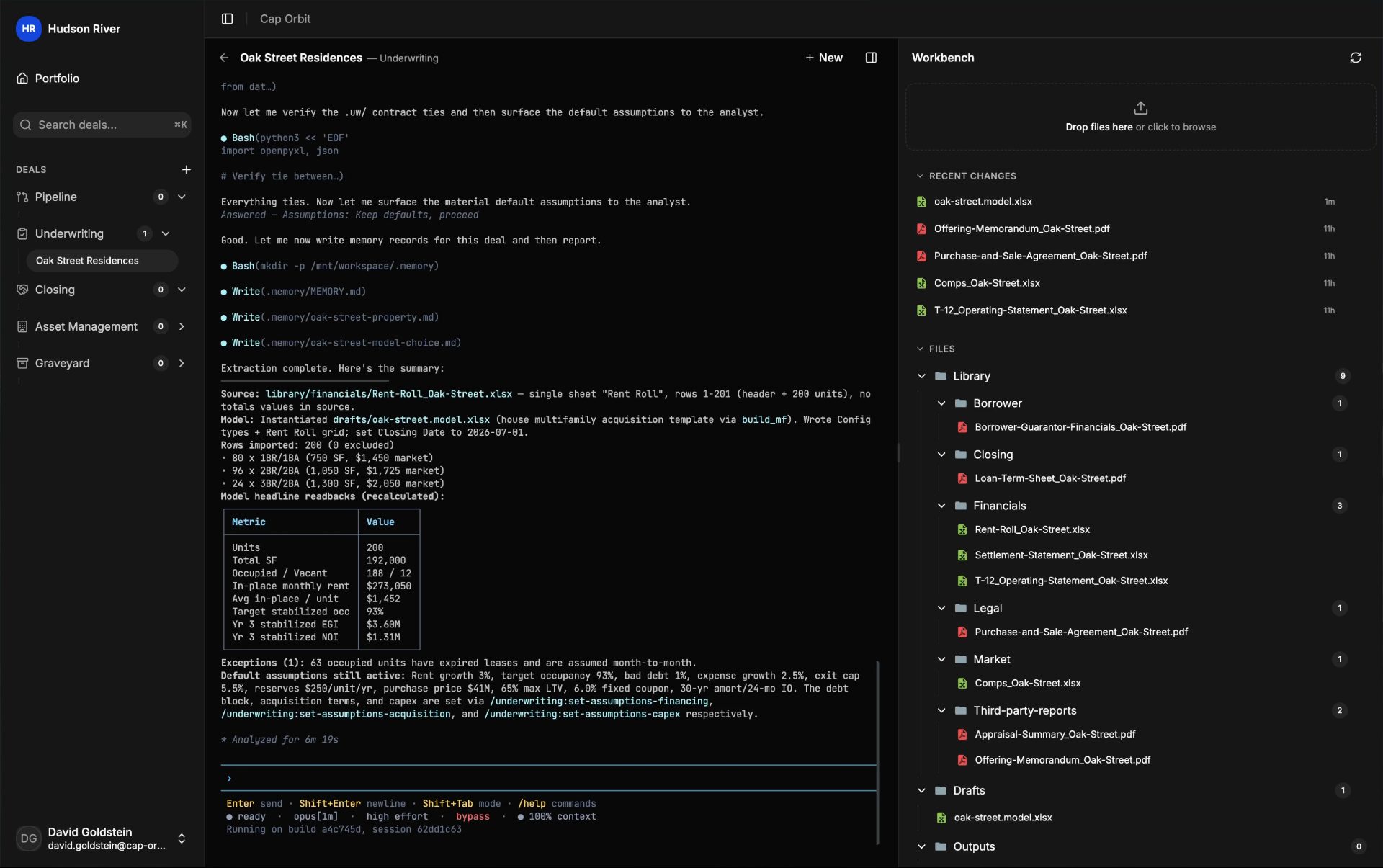
Fig · The first look on the broker’s package
A day on the deal
From the broker’s email to a memo the committee can read.
The same path runs on every deal your analyst touches, so the first-look screen, the underwrite, and the memo follow the firm’s standard every time.
- 01
01
Screen the inbound
See the headline numbers, with in-place figures beside the broker’s stabilized pro-forma. Decide which deals deserve a closer look.
- 02
02
Read the documents clean
A clean rent roll out of whatever the broker sent. The trailing-twelve comes out the same way, every figure footed to the document it came from.
- 03
03
Underwrite to your view
Set revenue, expense, capex, and financing one driver at a time. Each is proposed with a rationale and written into the model when your analyst accepts it. Or type the number into the cell: the formulas recalculate as it lands, and the terminal works from your figure from then on.
- 04
04
Run the scenarios
Size the debt to the binding constraint and price Base, Upside, and Downside off one switch, so the back-end risk is on the table before the memo goes up.
- 05
05
Bring the recommendation to IC
The screening note first, then the IC memo in the house voice, recommendation up top. The draft opens ready to mark up, every change tracked under your name.
01 · Underwrite to conviction
Build the case for the asset you know.
- The model is built for the deal’s asset class, from multifamily and industrial to medical office, hotel, and ground-up development, sized to the binding loan constraint and priced across three live scenarios.
- The workbook opens as a spreadsheet, not a preview. Two analysts can work the same sheet at the same time and watch each other’s edits land.
- A new model starts with clearly labeled house defaults. Your analyst replaces them with the deal’s numbers.
- The extract is a clean read of the documents, with inferred values marked. The occupancy read, the mark-to-market view, and the risk call stay with the analyst.
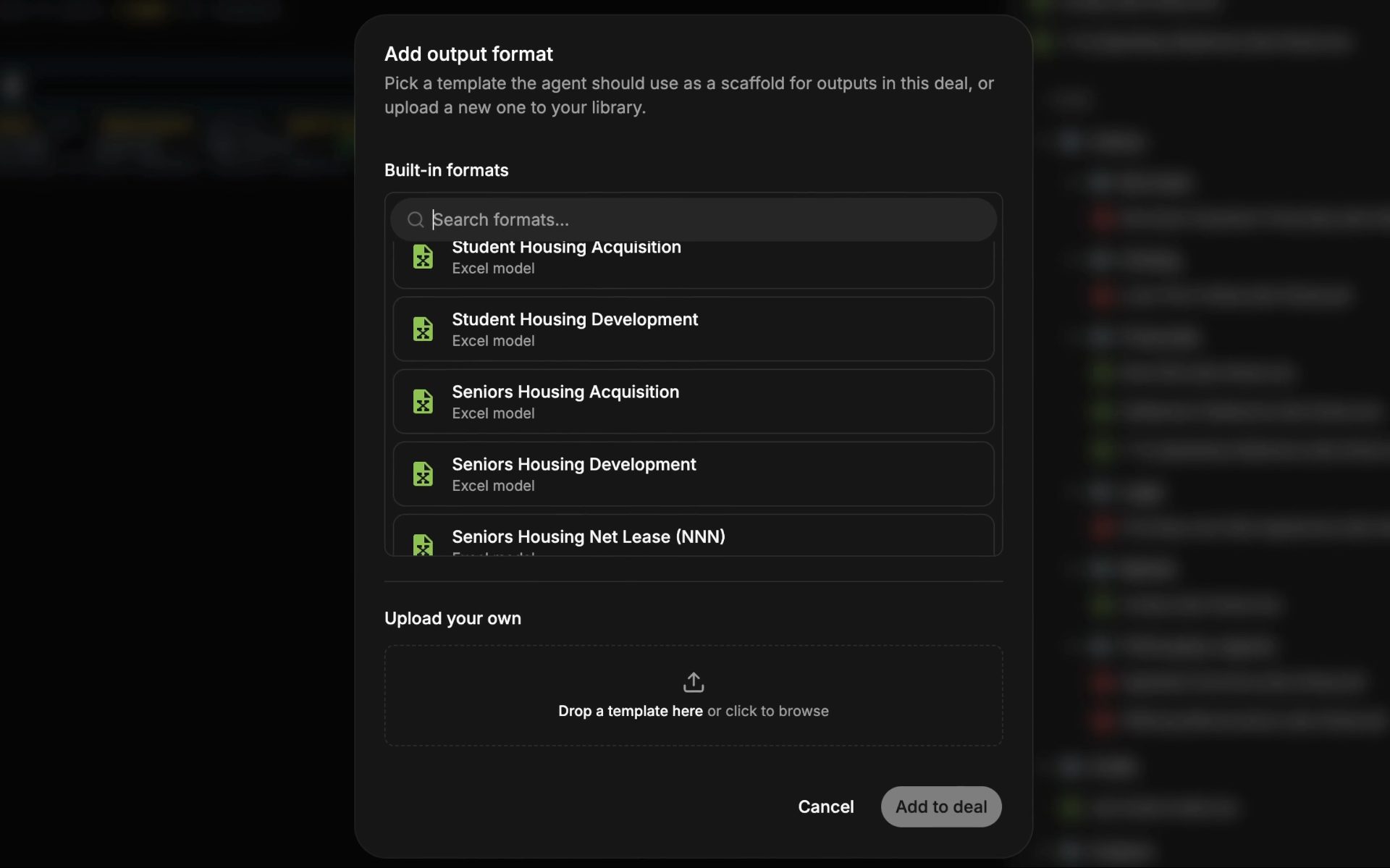
Fig · One returns engine, every asset class
02 · Bring a sourced recommendation
The screening note, then the IC memo, in the house voice.
- The screening note lands a clear pursue-or-pass in a concise first-look format. The IC memo leads with the recommendation, the equity ask, and the headline return, then the support.
- For the IC memo your analyst approves a section-by-section outline before a single line is drafted, and can redirect the conclusion before it writes.
- A missing number is flagged, never filled in. The model’s tables go in as exhibits the committee can verify.
- Ask it to match the firm’s filed memos and it follows the same section order, tone, exhibit style, and number treatment.
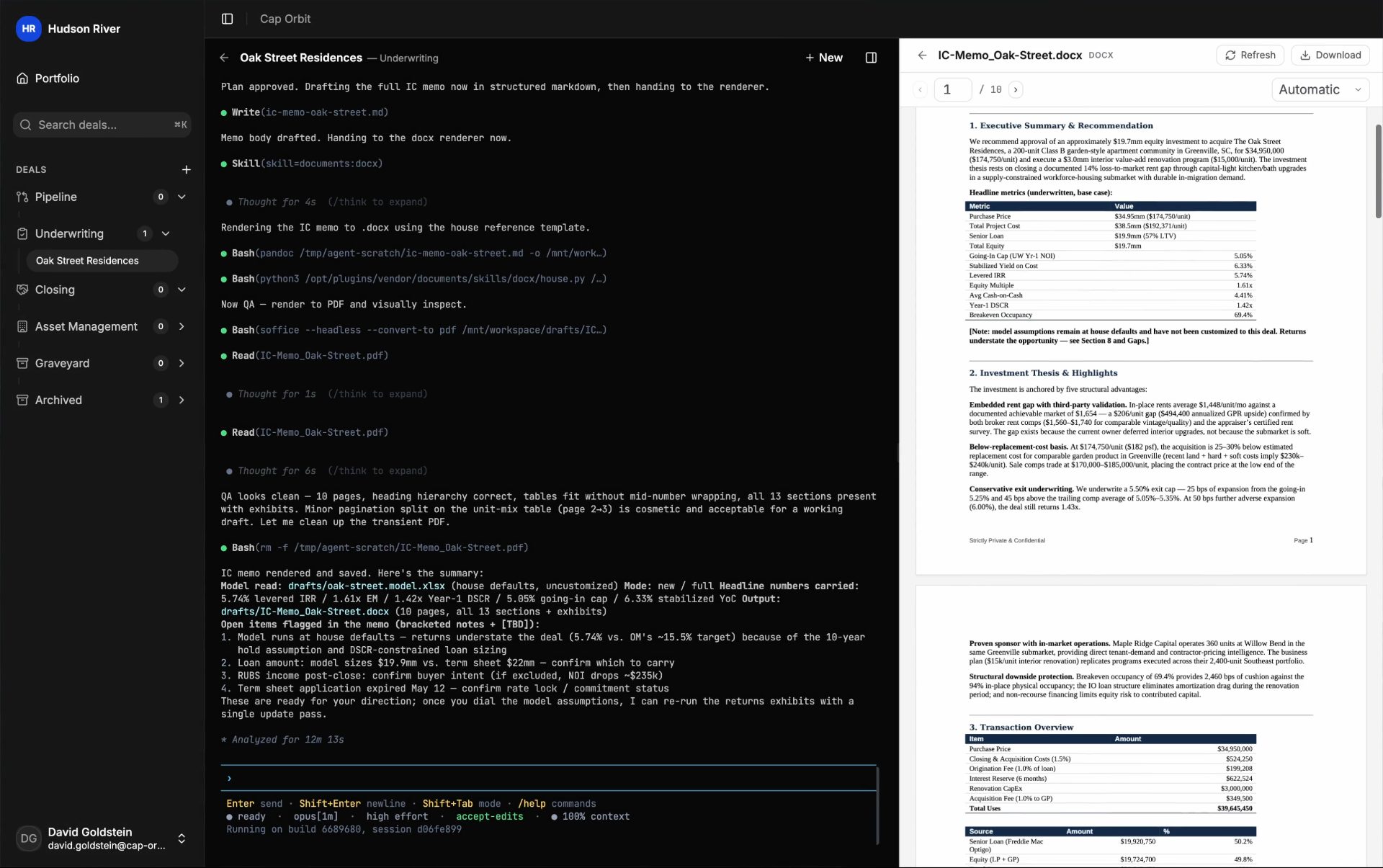
Fig · Recommendation first, traced to source
What changes for the team
Bring your firm’s standard to the first look.
Cover a wider pipeline with more time to understand each deal. Bring a higher standard to the work from the start.
More deals reviewed
Give more deals a proper look
Screen each new deal and fully underwrite the ones you pursue. Cover a larger pipeline at your firm’s standard.
A strong start
Analysts start from the firm standard
Give a first-year analyst the firm’s process from the start. Clean extracts feed a house-standard model and a memo in your format.
Time back to think
Hours move from formatting to judgment
Build the extracts, model, and memo as your analyst works the deal. Leave more time for diligence and a considered view.
Your analysts direct the work. Your firm owns the investment decision.
Cap Orbit produces the numbers and the drafts at speed. The pursue-or-pass call, the pricing view, and the investment decision stay with the analyst, the deal team, and IC.
Screening delivers facts at speed
The first look returns what the deal pencils to: going-in cap, levered return, debt yield, price per unit.
Every assumption is the analyst’s to set
Nothing enters the model until your analyst says so. The team shapes the underwrite one decision at a time.
The memo writes in the firm’s voice
The recommendation is drafted in your analyst’s voice, ready for the committee to read.