Know exactly what closed.
Read the executed documents and reconcile the settlement statement with the contract, loan, and underwrite. True up the going-in basis to what actually closed. Keep a record of the deal you funded.
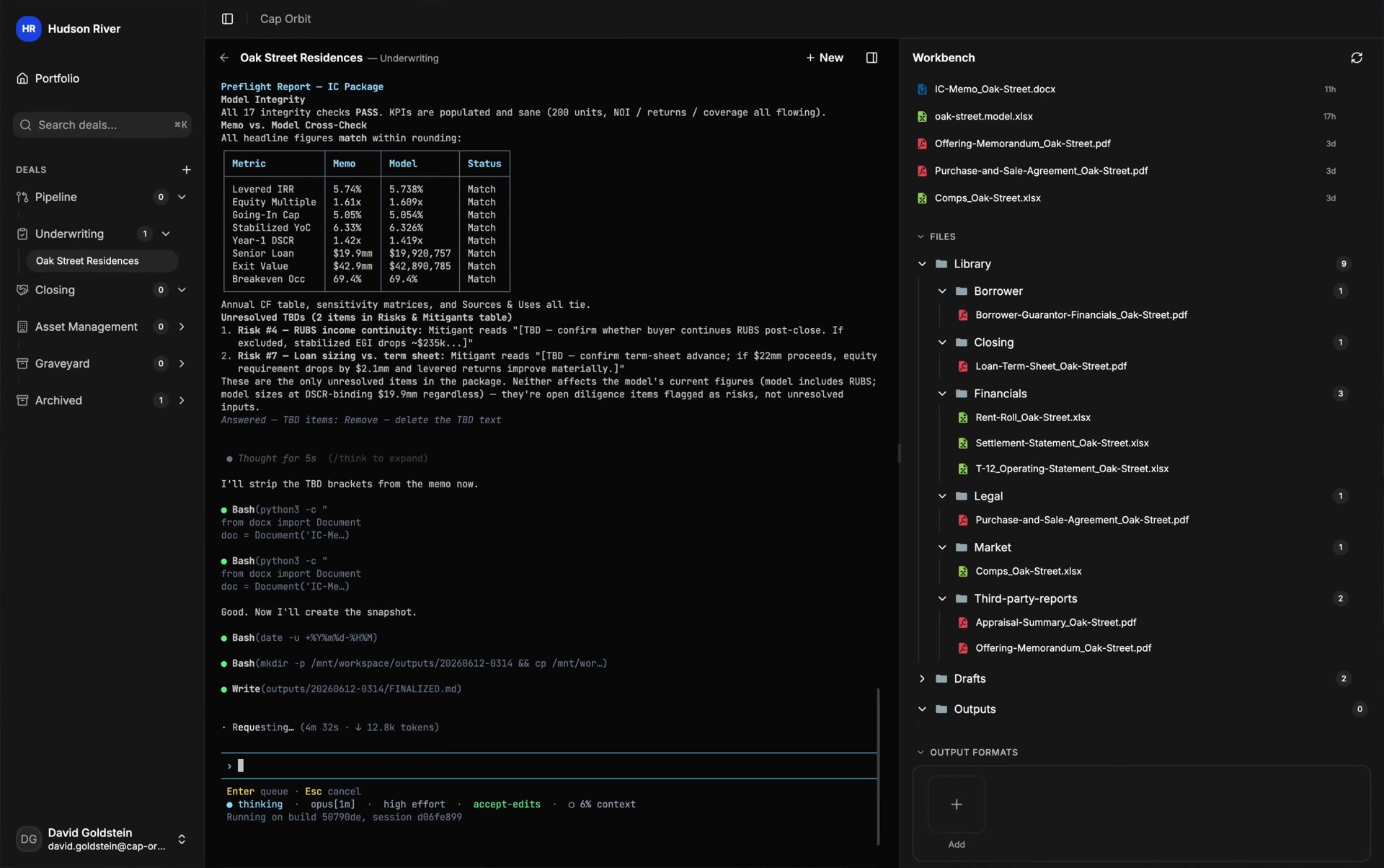
01 · The closing record
The signed terms, clearly on record.
- Pull the business terms from the executed documents. See dates and dollars, prorations and conditions, and what is required to fund.
- Counsel and title own the legal and settlement process. Cap Orbit gives the investment team a cited business record and reconciles the numbers on it. Counsel’s SharePoint or Box folder links to the deal as its data room. The lender’s attachment files from Outlook straight into the deal.
- Inferred values are marked as such. Nothing is guessed quietly.
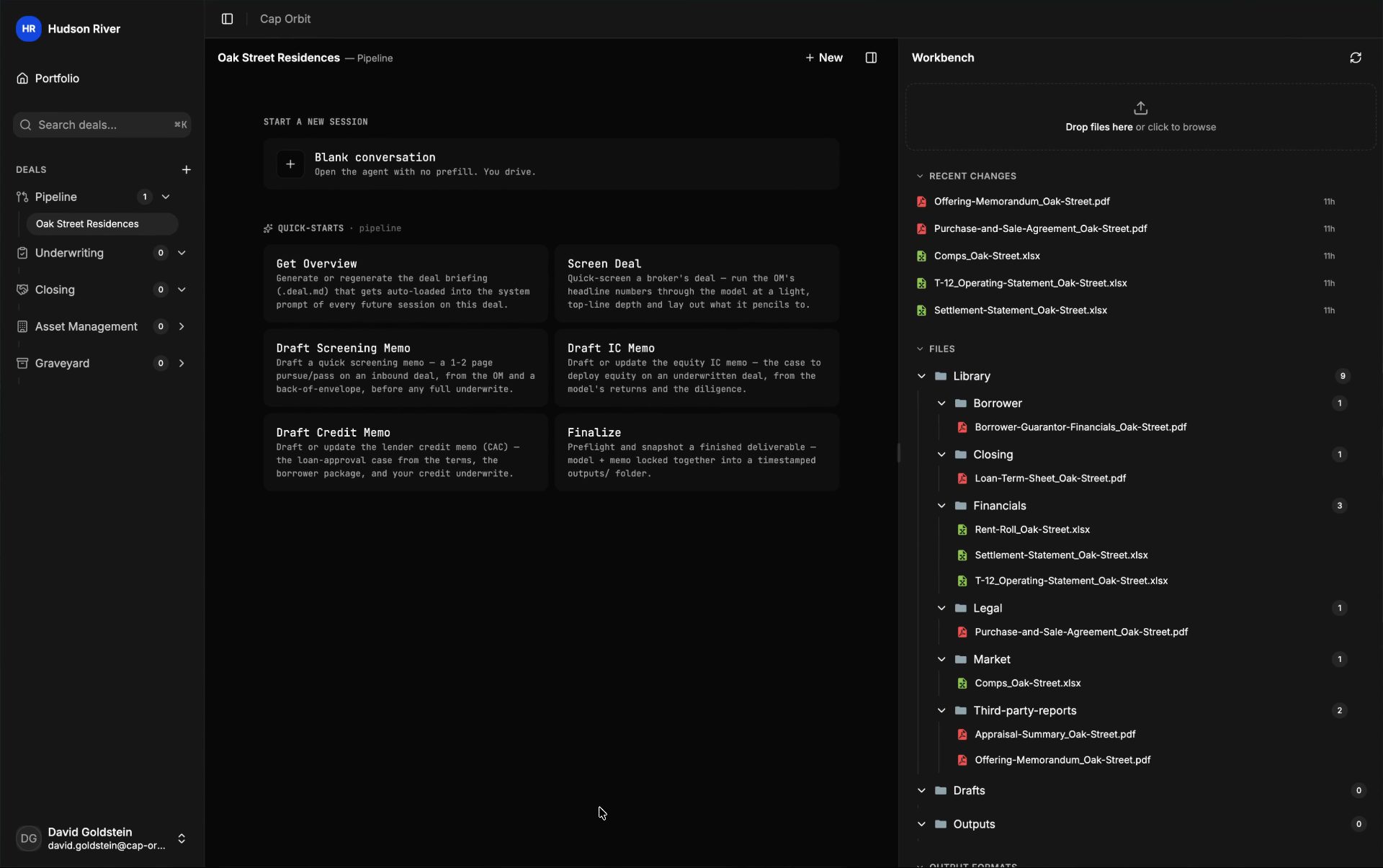
Fig · Read for the terms, reconcile the numbers
Sign to fund
From signed agreement to reconciled close.
The same path runs on every close, on the deal’s own documents and model. Before signing, the terminal drafts the term sheet and the diligence request list. Each revision of the term sheet comes back with a redline beside it.
- 01
01
Abstract the binding terms
Read the executed agreement and amendments alongside the lender’s funding conditions. Build one cited reference for dates and dollars, the proration method, and closing conditions.
- 02
02
Reconcile the settlement statement
Tie the title company’s statement to the contract, the loan, and the underwrite. Every variance is flagged, line by line, with its cause: a retrade, a proration true-up, a fee delta, or a rate move.
- 03
03
True up the going-in basis
Write the actuals into the model so the all-in basis, the going-in cap, and the day-one coverage read what was actually paid and funded. Recalculate, and confirm which headline numbers moved.
- 04
04
Draft the closing memo
Record what closed against what was approved, the actual sources and uses, the diligence and conditions satisfied, and the obligations carried forward, in the firm’s house format.
- 05
05
Hand a clean basis to the book
Lock the close and hand the trued-up basis to asset management as its going-in baseline.
02 · Abstract the terms
One terms reference for the closing team.
- Bring the agreement, amendments, and lender’s funding conditions into one reference. Find critical dates, purchase price, and deposit. Check the proration method and conditions to close. Each term cites its source section.
- It tracks amendments. A newly filed amendment supersedes the prior terms. The reference reads the latest and notes exactly what changed.
- The team signs off on the extracted terms before they become the reference of record.
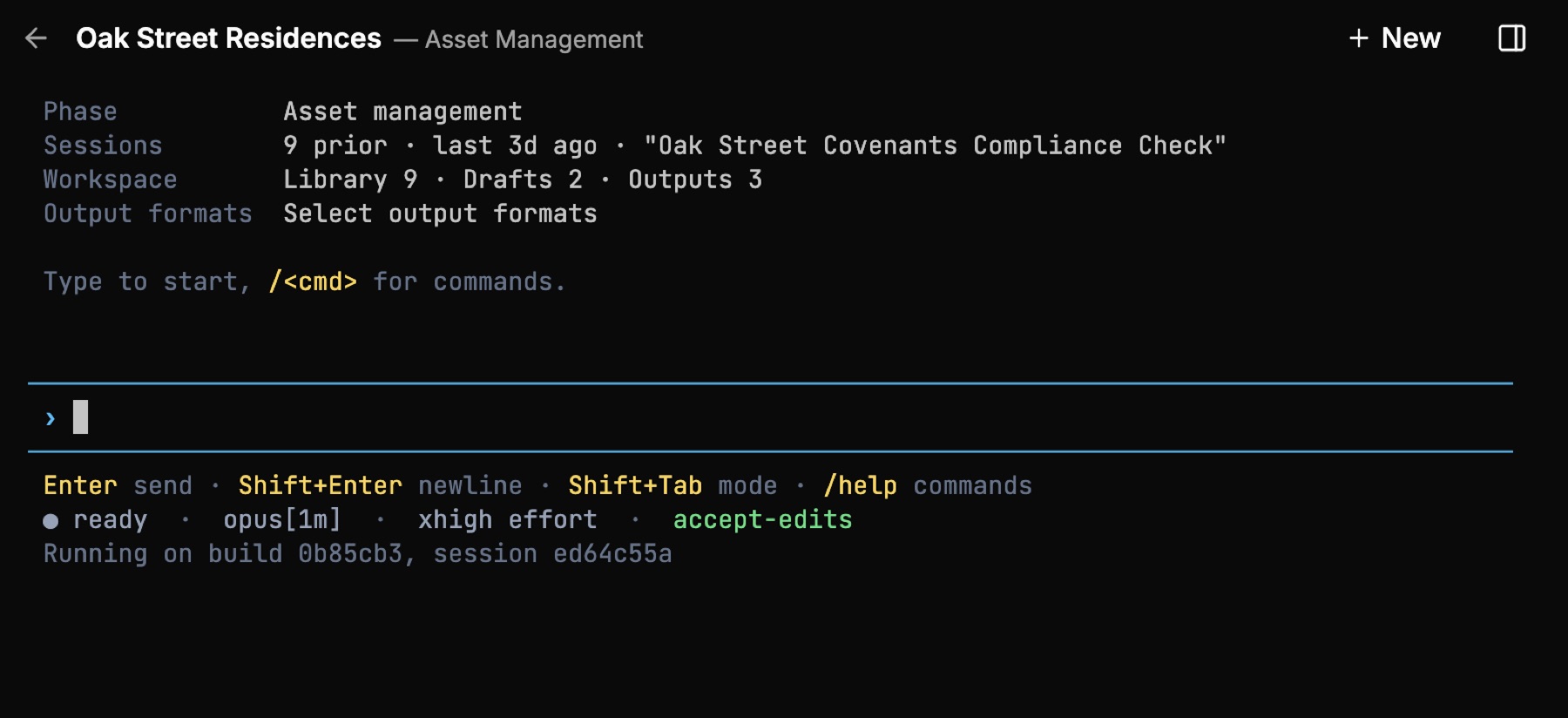
Fig · Dates, dollars, prorations, conditions, each sourced
Reconcile and true up
See where the final numbers changed.
The actual price, prorations, closing costs, reserves, and loan proceeds tie back to the contract, the loan, and the underwritten sources and uses. The trued-up going-in basis is written into the model.
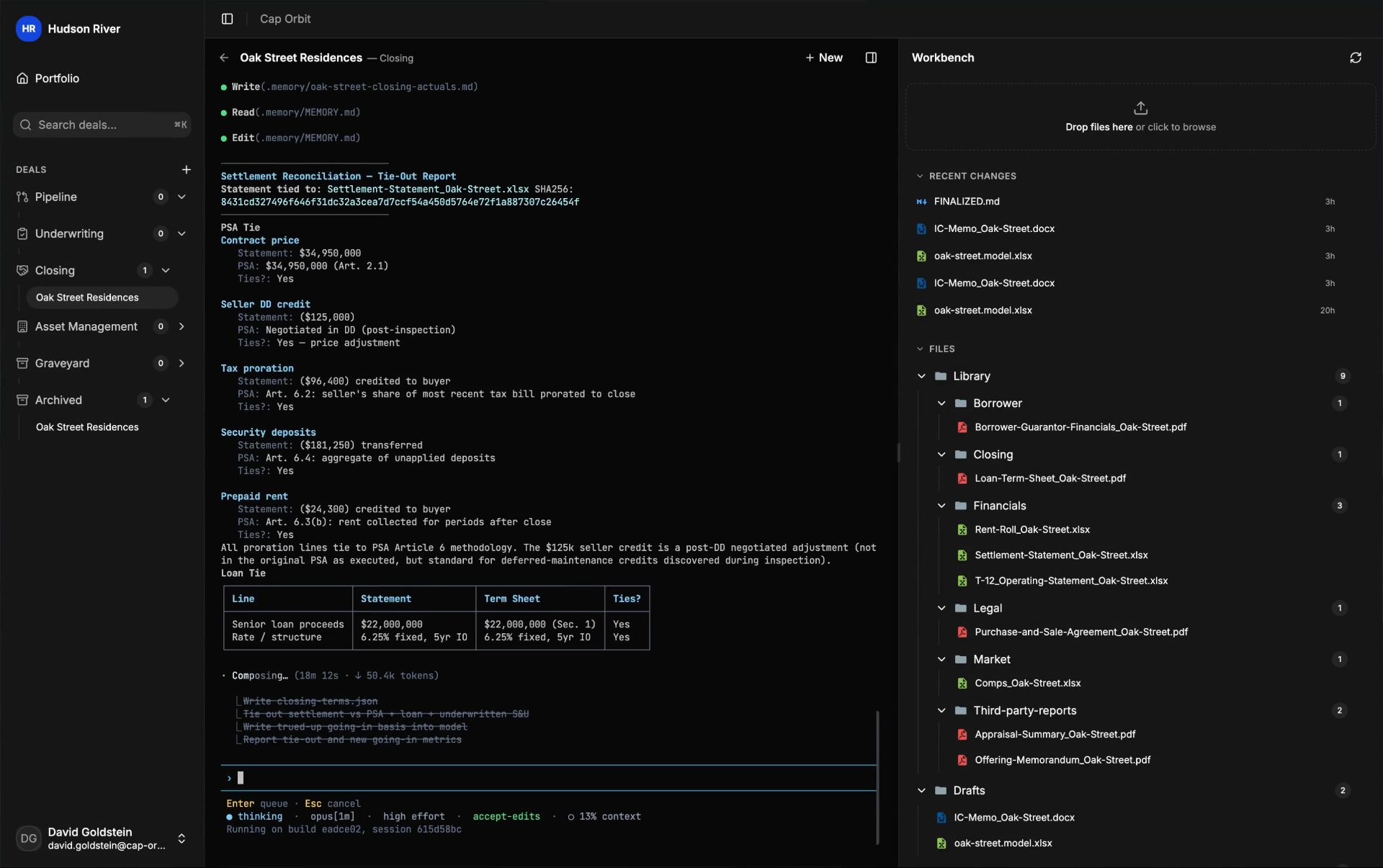
Fig · Settlement statement tied to the underwrite
What the close produces
Four records, one deal.
Keep the cited terms and closing checklist together. Finish with the model trued to actuals and a memo comparing the close with the underwrite.
Terms reference
The binding terms, cited
The critical dates, the dollars, the proration method, and the conditions to close and to fund, read from the executed documents and the lender’s conditions.
Closing checklist
Conditions to close, tracked
The conditions-to-close list, grouped closing, funding, and post-closing. Each item carries its section, who delivers it, the due date, and its status. Update it as items land and the list stays current.
Trued-up model
The basis on what closed
The actuals written into the same model the deal was underwritten in, so the going-in basis, cap, and coverage reflect what was actually paid and funded.
Closing memo
Closed as underwritten
The record of final terms against the approval, the actual sources and uses, diligence and conditions satisfied, and the obligations carried forward.
The closing memo
What was approved. What actually closed.
Compare the approved deal with the executed agreement, funded loan, completed diligence, and final settlement. The memo explains the differences. Every figure traces to the model, terms reference, or a filed report. Mark it up with tracked edits you can accept or reject.
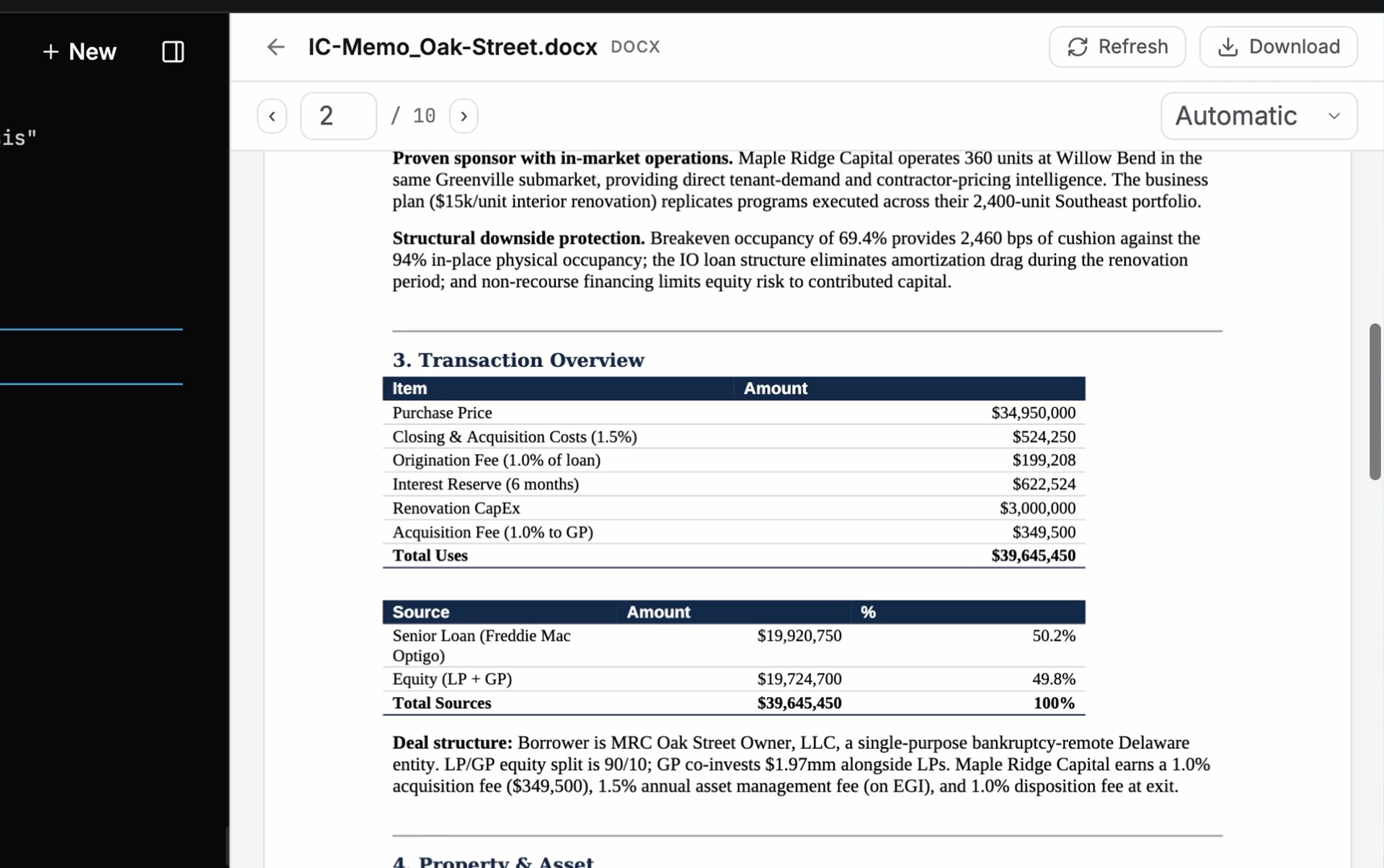
Fig · Final terms versus the approval
03 · Finalize and hand off
Close the record. Carry the basis forward.
- Finalize freezes a timestamped closing record and confirms the memo’s headline numbers match the trued-up model. Open items are carried for decision. The filed documents go out as one closing set: merged into a single PDF, stamped, watermarked, and encrypted.
- If the team waives an item, the waiver is recorded against the item, so the record is complete at fund.
- The trued-up basis becomes asset management’s going-in baseline. Every period close measures performance against what the deal actually cost.
deal · oak-street
Fig · One workspace, the basis carried forward
The deal is funded. The basis is reconciled. The record backs every figure.
Materiality, waivers, and funding remain firm decisions. Cap Orbit gives the team the sourced record behind them.
Cited, to the section
Every abstracted term carries the section it came from. Counsel and the title company own the legal work. The team owns the business record.
Sourced, to the line
Every figure on the settlement statement ties to the contract, the loan, or the underwrite. Variances surface with their cause, line by line.
Complete, on the record
The closing record is final. Every open item is resolved or knowingly waived by the team, and the waiver sits in the record.