Carry the underwrite into ownership.
Start ownership with the model, assumptions, and memo that won approval. Add each reporting period to the same record. Keep the investment thesis close from origination through the hold.
01 · Continuity
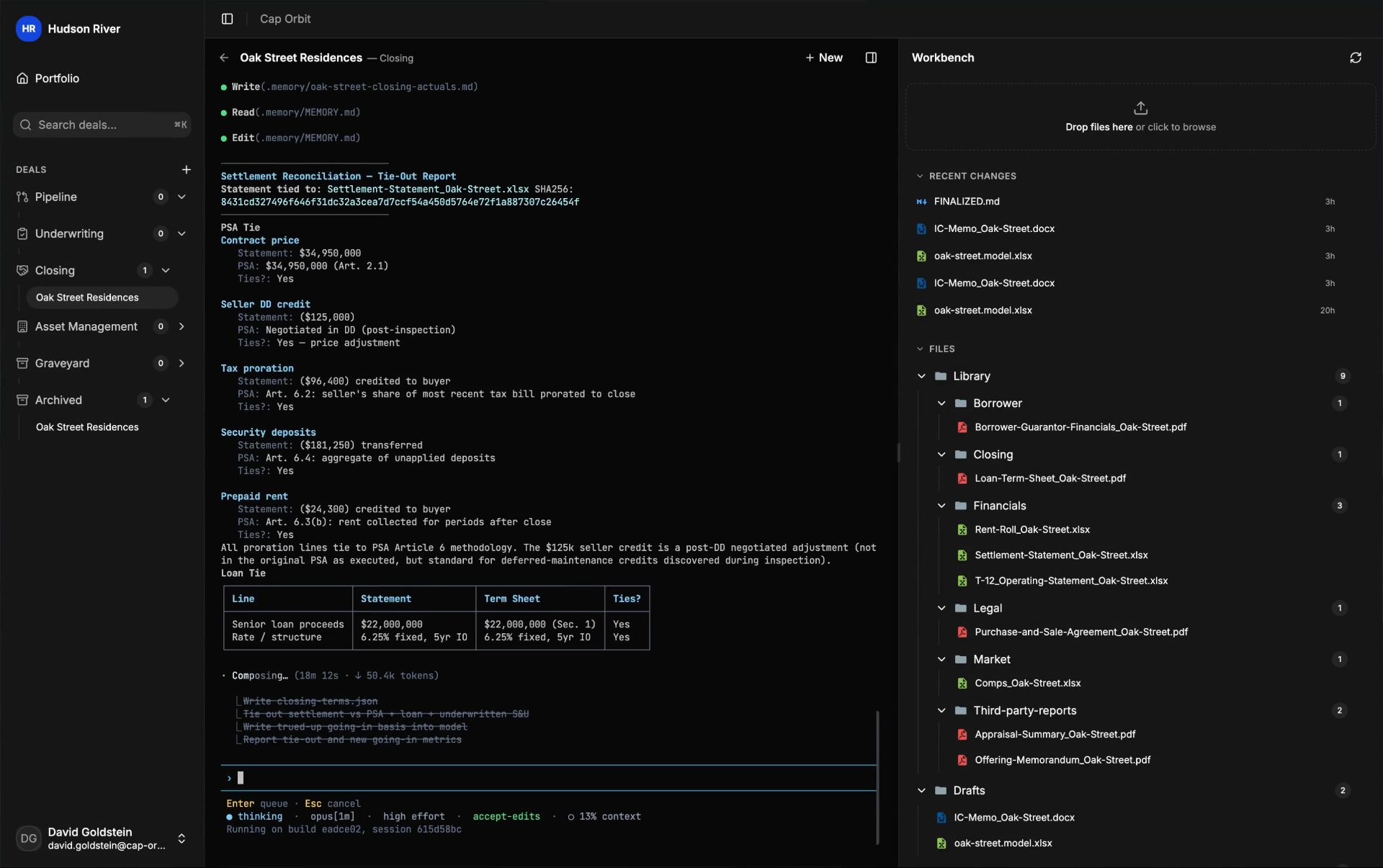
You bought the asset. Keep sight of why.
- The original underwrite is already in front of you. The model, the assumptions, and the memo that won approval stay in the deal’s workspace, so the team starts the hold from the firm’s own view.
- Every period close measures the asset against the original underwrite and against the operator’s budget. The thesis you bought on is the standing yardstick through the hold.
- One team owns the asset from close through every reporting period, reading off the same record the deal team built.
deal · oak-street
Fig · Asset management picks up where underwriting left off.
One record
Plan versus latest, always in view.
Compare the underwrite and operator budget with the reforecast and actuals in a house asset-management tracker. Edit the spreadsheet directly. The terminal’s refresh arrives as revisions alongside your changes.
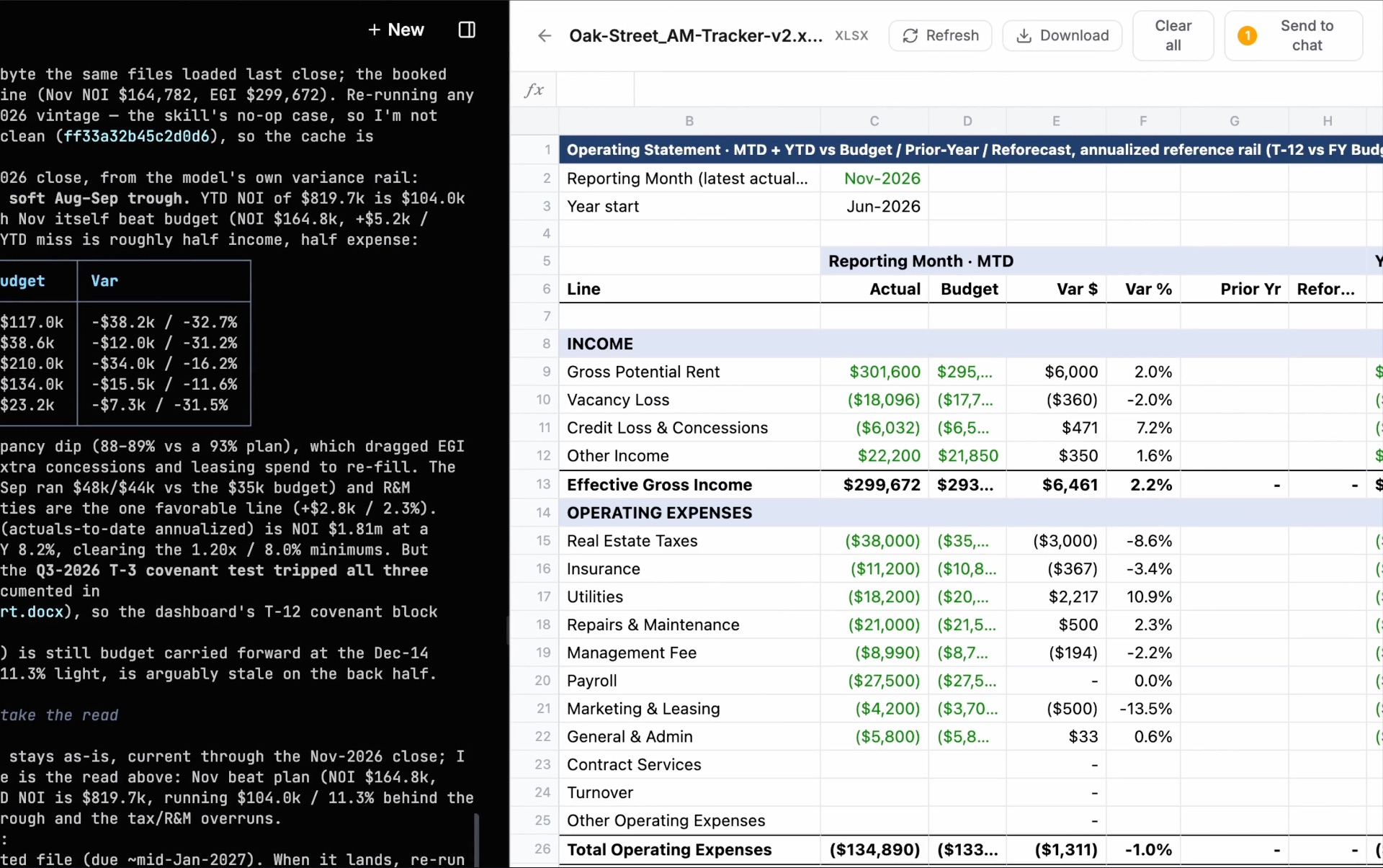
Fig · Underwrite, budget, forecast, and actuals on one record.
The period close
Close the period against the thesis you bought.
Bring in actuals and refresh the forecast. Compare performance with plan. Each period adds to the record while earlier closes stay intact.
- 01
01
Pull the period’s actuals
Load the period’s operating statement and rent roll into the record, from the operator’s package in a linked SharePoint or Dropbox folder, or from the Outlook message it arrived in.
- 02
02
Refresh the forward view
Take the reforecast off actuals-to-date, separating a permanent variance from a timing one, so the forward numbers move only for changes that affect the outlook. The team makes that call.
- 03
03
Measure performance against plan
See where the period landed against plan, with each material variance, its cause, and the action it points to.
- 04
04
Carry it to the book
The refreshed headline figures publish to the firm’s portfolio view, stamped with how current they are, so the book reads off closed periods.
02 · Permanent history
Every period, exactly as you reported it.
- Each period adds a dated entry. A restatement adds another beside the original. Keep the full history of what the asset reported and when.
- Bring in an asset already in operation. The first close creates its record and adds available history. Your team reviews and signs off on everything before it is written.
- Plan, budget, forecast, and actuals each carry their own lineage, so the team can read how the forward view evolved across the hold.
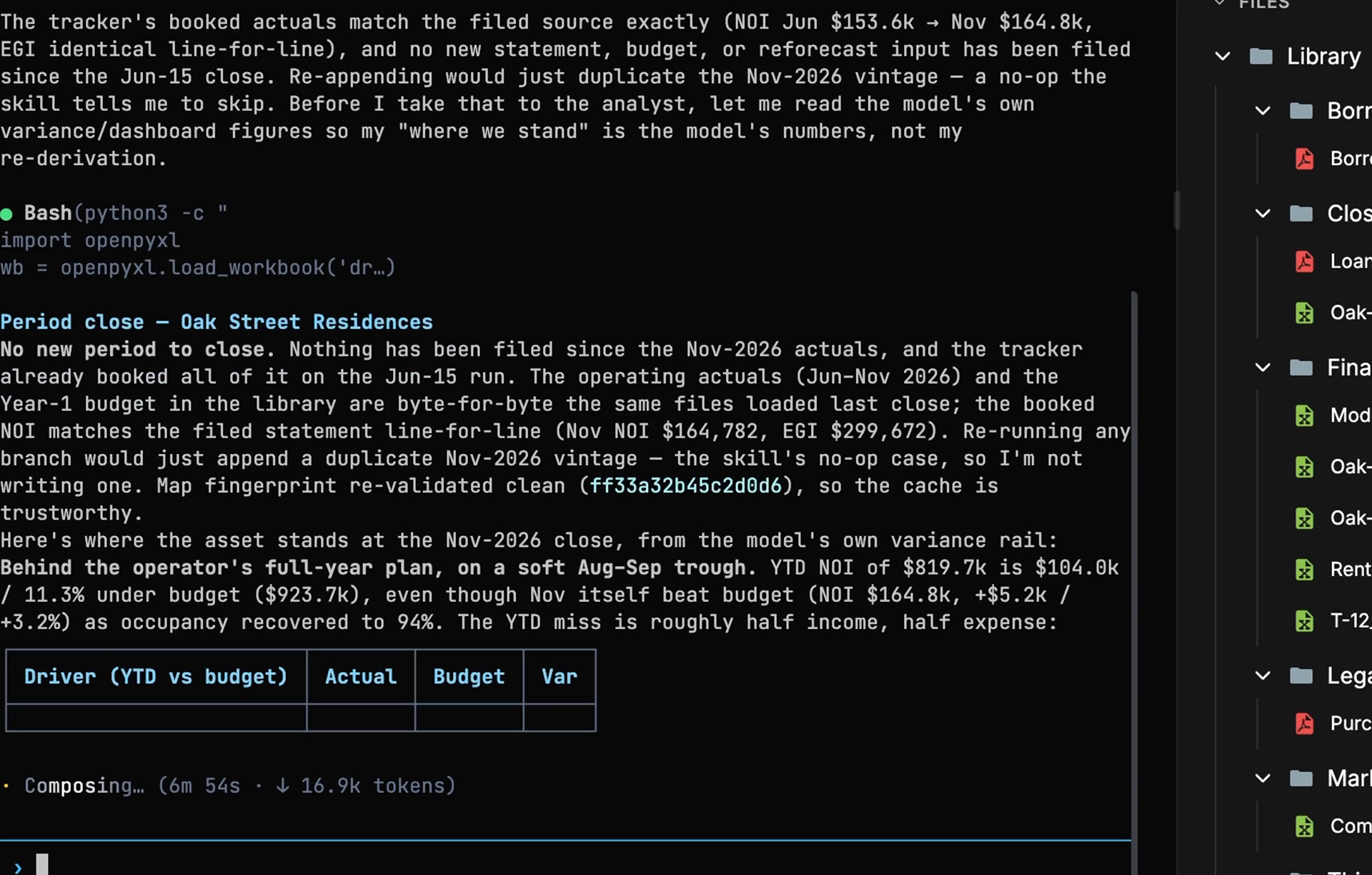
Fig · The period refresh, with every prior period preserved.
03 · Covenant standing
Check the covenants against the signed terms.
- The covenant terms are sourced straight from the loan agreement and its amendments, each test, basis, and threshold traced to the section it came from. Your team reviews and confirms the schedule before it becomes the reference of record.
- Each period’s metrics are tested against those terms on the basis the agreement states, with the cushion to each threshold, anything trending toward a trip, and the cure path it carries.
- Each period’s covenant result sits beside the operating actuals, so the loan-term history runs on the same timeline as asset performance.
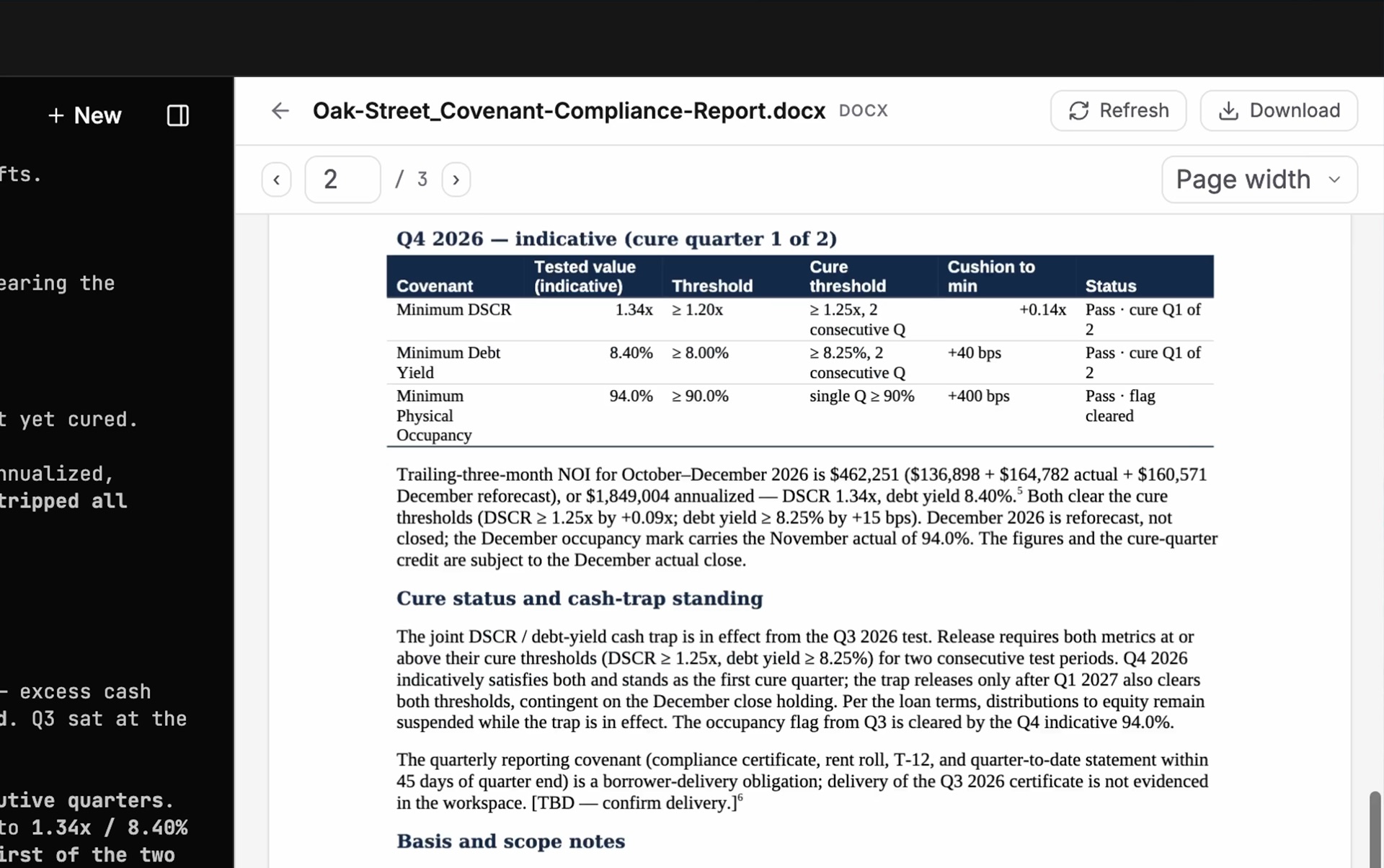
Fig · The period’s covenant test against the loan terms.
What your team runs
A clear read, every reporting period.
Period close, covenant standing, and the AM review all read and write the same record the deal team built.
Every period
Close the period
Pull the actuals, refresh the budget and forecast, and report where the asset stands against plan. A number you fix by hand survives the terminal’s next pass.
On a test date
Check covenant standing
Test the current metrics against the loan terms on their stated basis, with cushions, anything tripping or trending, and the cure path.
For the committee
Write the AM review
Draft the review in your firm’s format. Explain performance against the underwrite and budget, then the reforecast and covenant standing. Recommend the next action, with every figure traced to the record.
The numbers are ready. The next move is yours.
Cap Orbit closes the period, tests covenants, and drafts the review. Your asset manager weighs the variance and sets the forecast. Your team recommends whether to hold, sell, or refinance.
Every period preserved as a dated entry
Each close and every restatement is appended to the record. The full history of what the asset reported, and when, remains auditable across the hold.
The covenant read is yours
Your team confirms the schedule and owns the read. The loan agreement stays beside every test.
The thesis call is yours
The review is drafted recommendation-first for your team to own. Whether the asset is on plan, and what to do about it, is the firm’s call.