Keep the investment thesis in view.
Compare the underwrite and budget with forecasts and actuals on one record. Use the terminal that built the deal to review each period against plan. Open the tracker as a spreadsheet and edit it yourself.
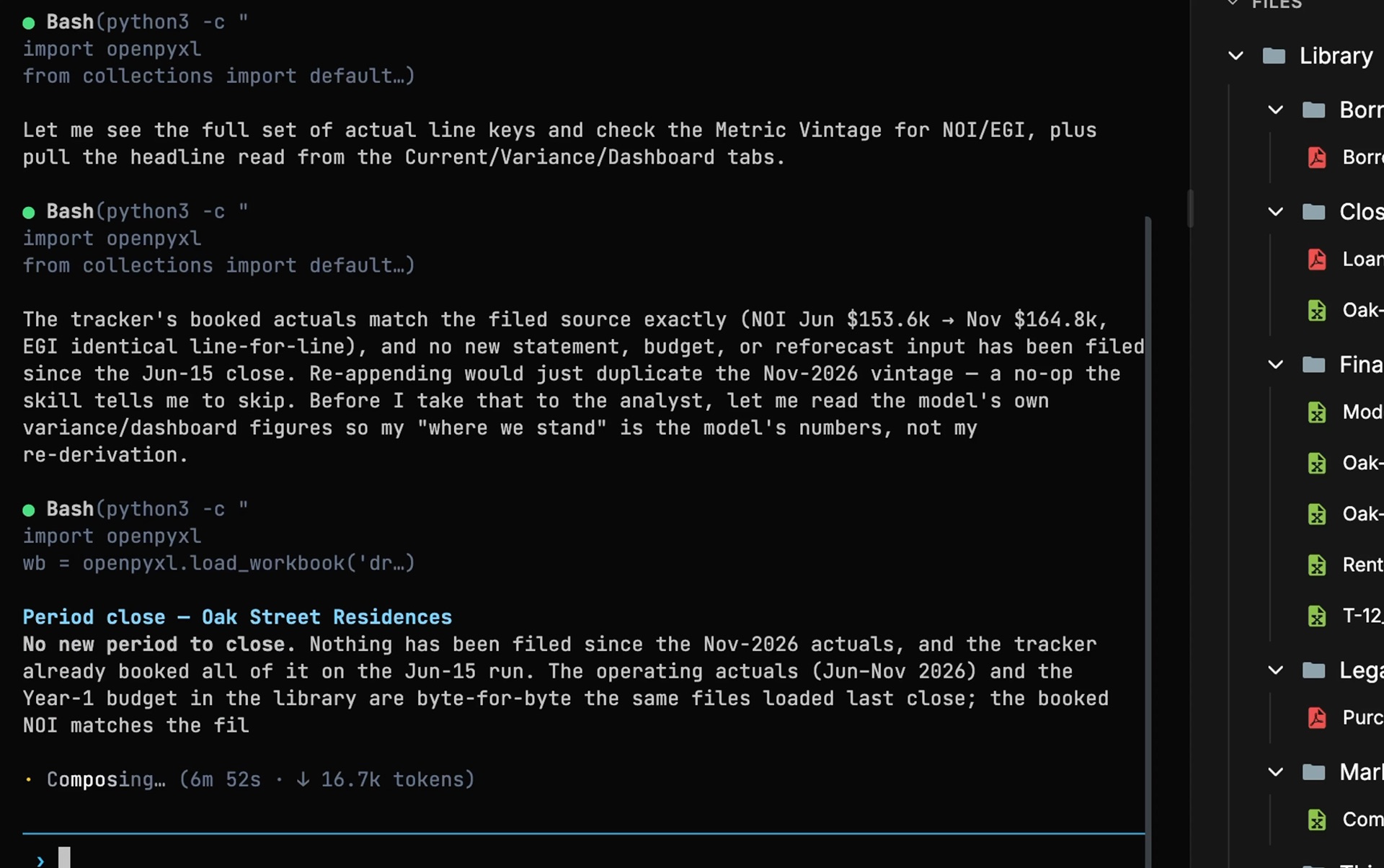
One living record
See the plan beside the latest numbers.
Keep the original underwrite and operator budget beside the reforecast and actuals. Compare each period with the thesis you bought. Attach a house asset-management tracker and the terminal fills it in place.
deal · oak-street
Fig · The thesis carries into ownership
01 · Every period on file
Every close is a permanent entry on the record.
- Each period close lands as a new dated entry on the record. Prior periods stay exactly as they were reported.
- A restatement is a new entry that supersedes the old. The earlier figure stays on the record, flagged, so the change is legible.
- For an asset already in operation, the first close creates the record and adds available history. The analyst reviews the full load before signing off.
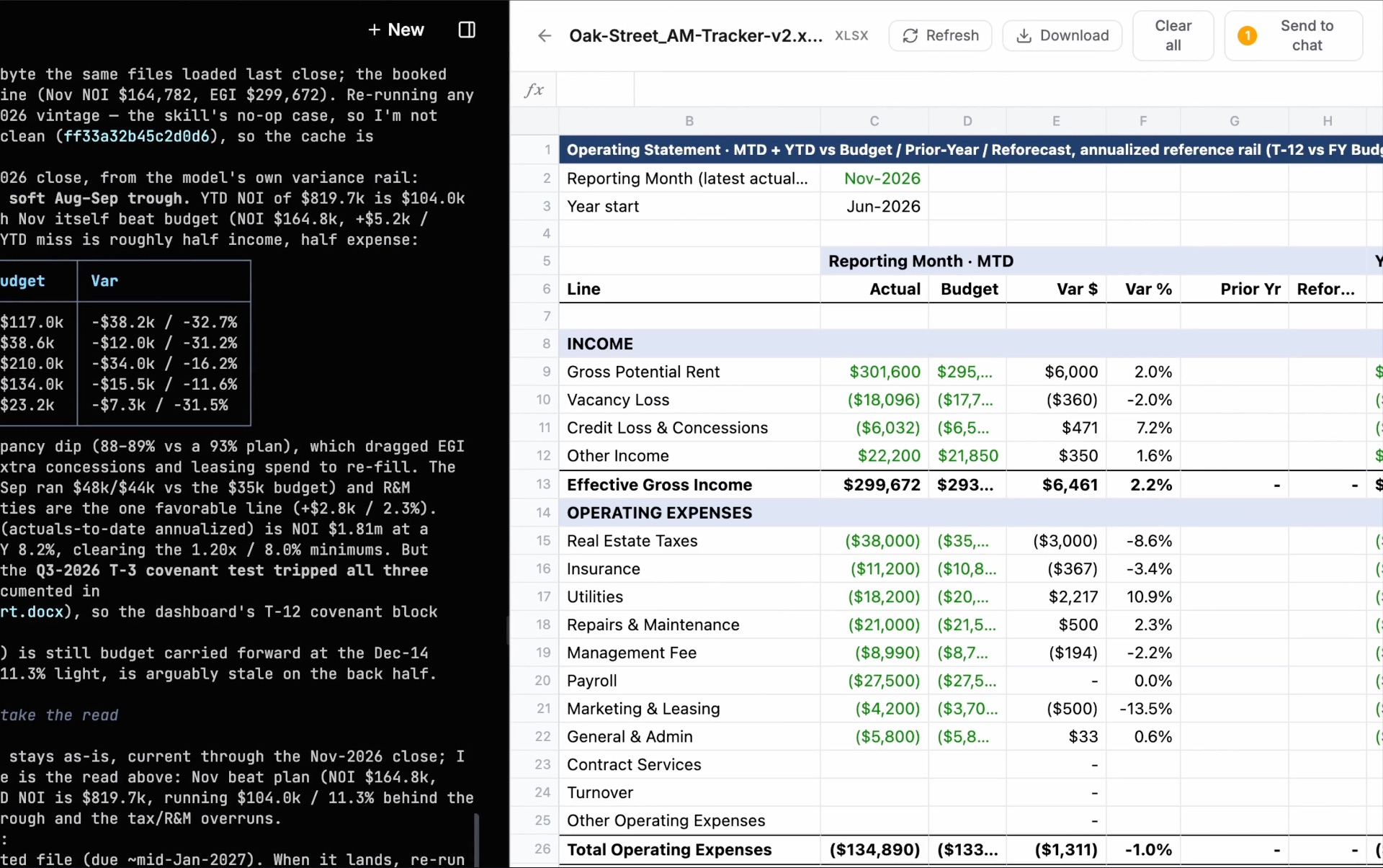
Fig · Each period close, on the record
Closing a period
Close the period. Understand the variance.
Follow the same steps each reporting cycle. Compare periods on a consistent basis.
- 01
01
Pull the actuals
Read the period’s operating statement and rent roll into the record. The operator’s package lands in a linked SharePoint or Dropbox folder, or arrives in Outlook, and the terminal files it from there. An unchanged re-run is left alone.
- 02
02
Refresh budget and forecast
Bring in a new operator budget when one is filed, and take the forward view off actuals to date. A permanent variance moves the forecast. A timing variance that self-corrects does not.
- 03
03
Read against plan
Compare NOI, occupancy, and return to date with budget and the original underwrite. See the cause of each material variance and where the reforecast stands.
02 · Covenant standing
Know where you stand on each covenant.
- Read covenant terms from the loan agreement and amendments. Each test cites its basis and threshold, consequence and cure path. The analyst reviews and signs off on the full schedule before it becomes the reference of record.
- Each covenant is tested on its own stated basis against the model’s current metrics. You see the cushion to every threshold and anything tripped or trending toward a trip.
- The investment team gets a sourced operating read against the loan terms, ready for the next lender, hold, sell, or refinance discussion.
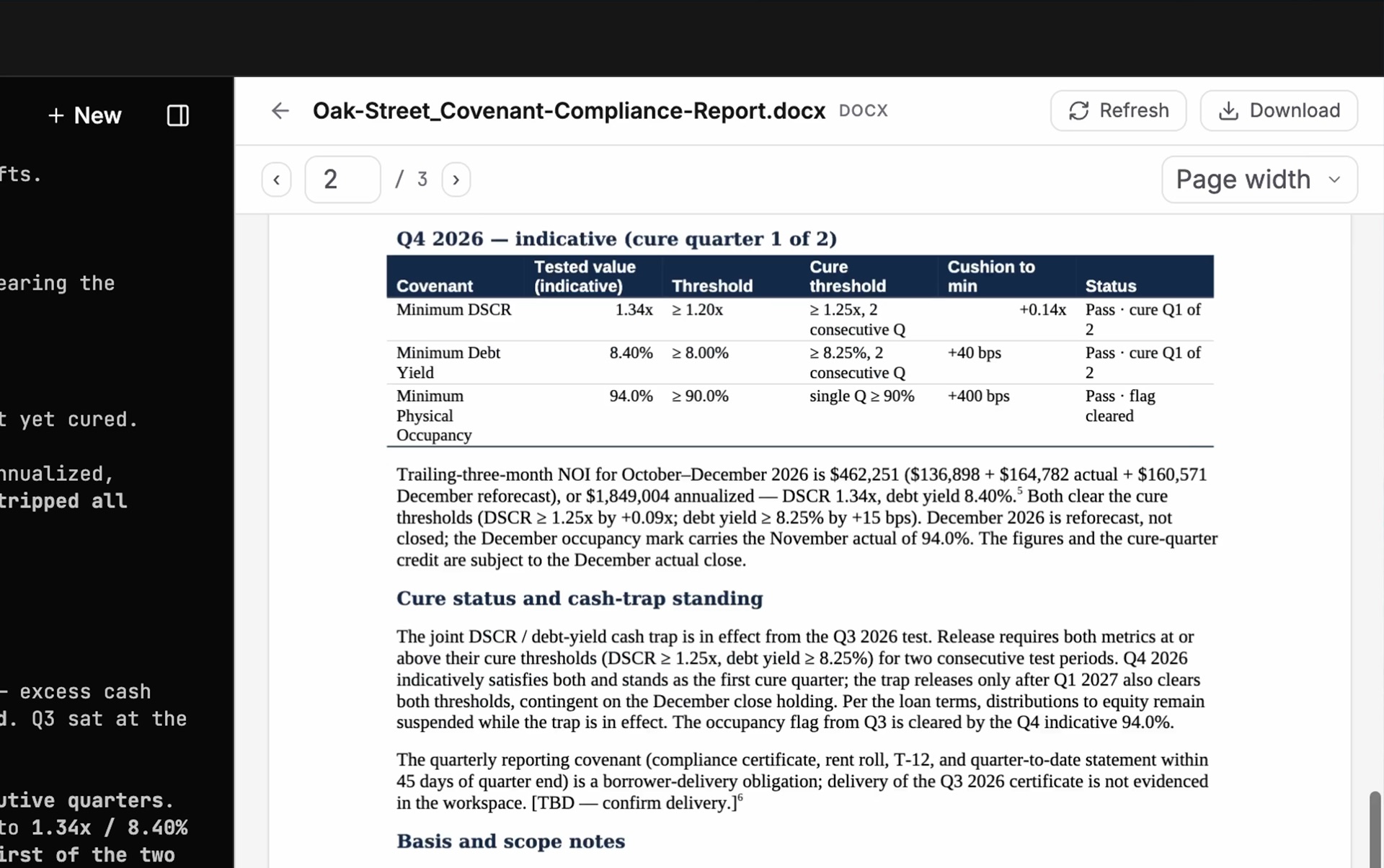
Fig · The period’s covenant test against the loan terms
Asset management, every period
Three jobs, run every period.
Close the period, check covenants, and write the review in the terminal that built the deal. Work from the same record each cycle.
Refresh the period
Close the period
Pull the period’s actuals, budget, and reforecast onto the tracker and report where the period landed against plan. Correct a figure in the cell and the correction stays through the next refresh.
Check covenants
Test the loan terms
Read the covenant terms from the loan agreement, test the model’s current metrics against each on its stated basis, and lay out cushions, trips, and cure paths for the team.
Refresh the memo
Write the review
Draft the periodic asset-management review in the firm’s house format, with any prose that now contradicts the refreshed numbers flagged.
The asset-management review
Write the periodic review in your house format.
Show committee and investors how performance compares with the underwrite and budget. Explain the reforecast, covenant standing, and recommended action. Every figure traces to the record. Edit the review with every change tracked under your name.
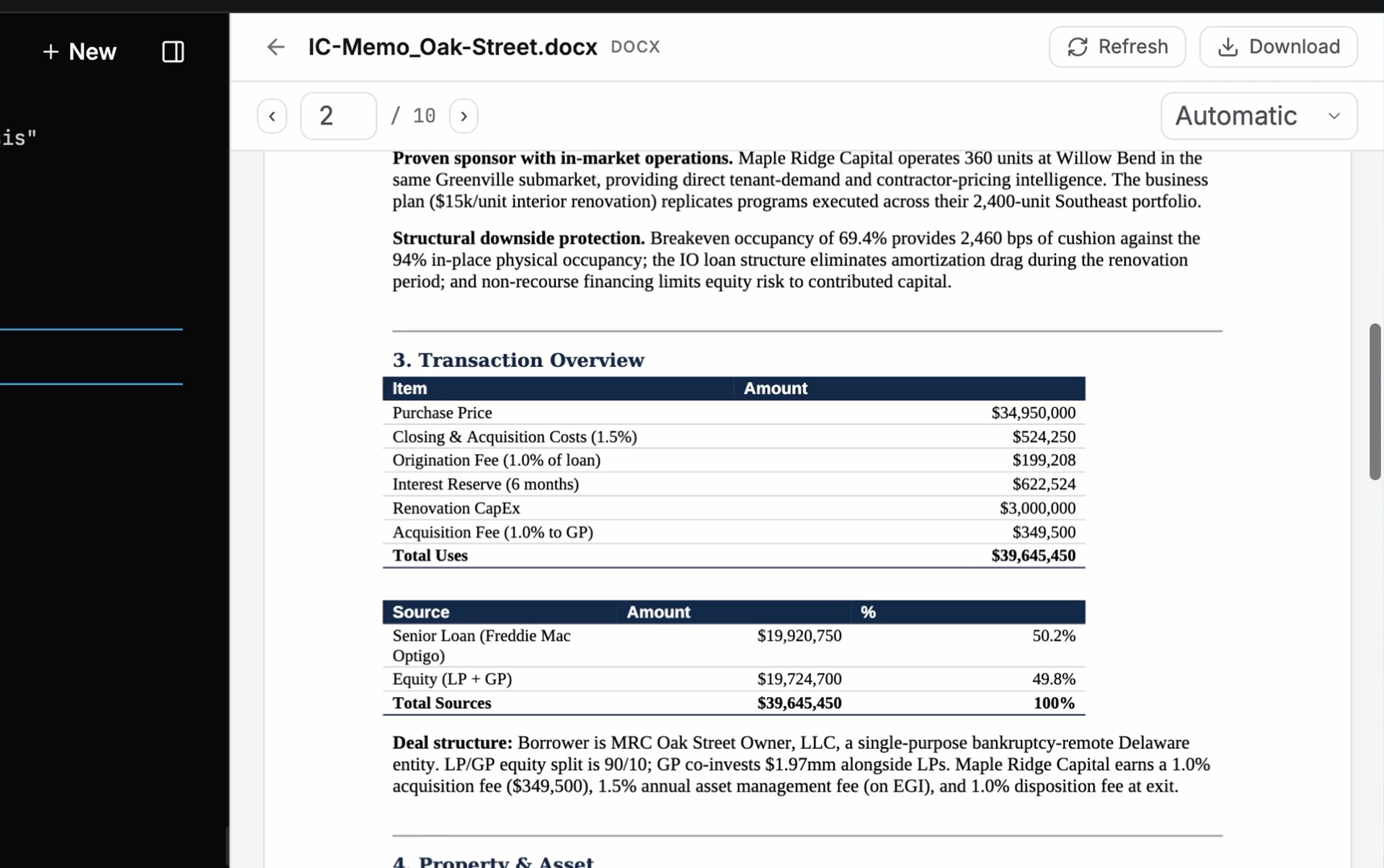
Fig · Recommendation first, figures traced
Hold the asset to the thesis you bought.
Review performance, test the terms, and draft the report. Give your team time to understand the variance and reforecast, then decide whether to hold, sell, or refinance.
Your team makes the call
The review is a recommendation-first draft the analyst owns. The reforecast call and the decision to hold, refinance, or sell remain with your team.
Every period stays on the record
A close is never overwritten. A restatement adds a new entry that supersedes the old, so every figure your team ever reported is recoverable.
The underwrite stays on file
The original underwrite stays available after close, so every period reads against the investment thesis as well as last quarter.