Your recommendation. Your firm’s voice.
A screening note to pursue or pass. An equity memo for committee. A credit memo for the lender. Each draws on the deal’s files and model, in your firm’s format and voice.
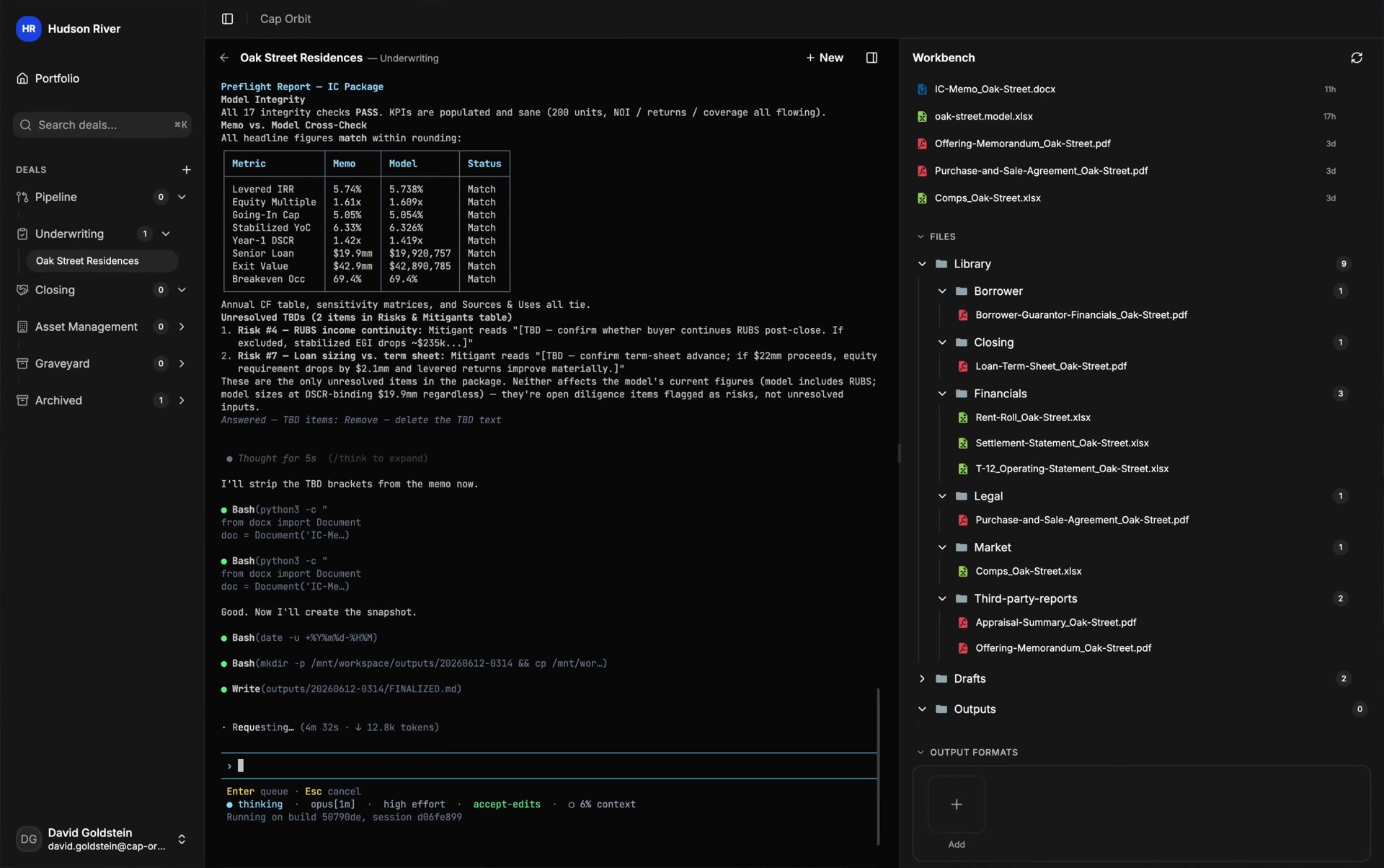
Three memos, by seat
The same deal. A different case for each reader.
Write each memo around its reader’s decision. Build the committee deck in the same session, with action titles and one highlighted series. It is checked for layout and opens ready to edit.
Screening
Decide fast: pursue or pass
Get a one-to-two-page first look from the offering memo and a back-of-envelope calculation. The numbers lead to pursue or pass. If pursue, the note sets out next steps and the price to hold.
Investment committee
The equity memo, return-first
Open with the equity ask, investment thesis, and headline IRR and multiple. Build the upside case through returns, waterfall, and promote. Close with an explicit approval recommendation, including structure and conditions.
Credit
The lender memo, downside-first
Build the loan-approval memo from the terms, borrower file, and credit underwrite. Open with the borrower and facility, the amount, rate, and term. Set out LTV, DSCR, and debt yield. Run the downside, then recommend approve or decline with terms and conditions.
01 · Recommendation first
Make the recommendation clear from the first line.
- Every memo opens with the recommendation and the headline numbers, then the support behind them. The answer sits where the committee expects it.
- Lay out the thesis and returns. Pair each risk with its mitigant. Close with the conditions.
- Every qualitative claim is anchored to a number: $1,338 psf, 46% below recent comps. Adjectives without a figure are cut.
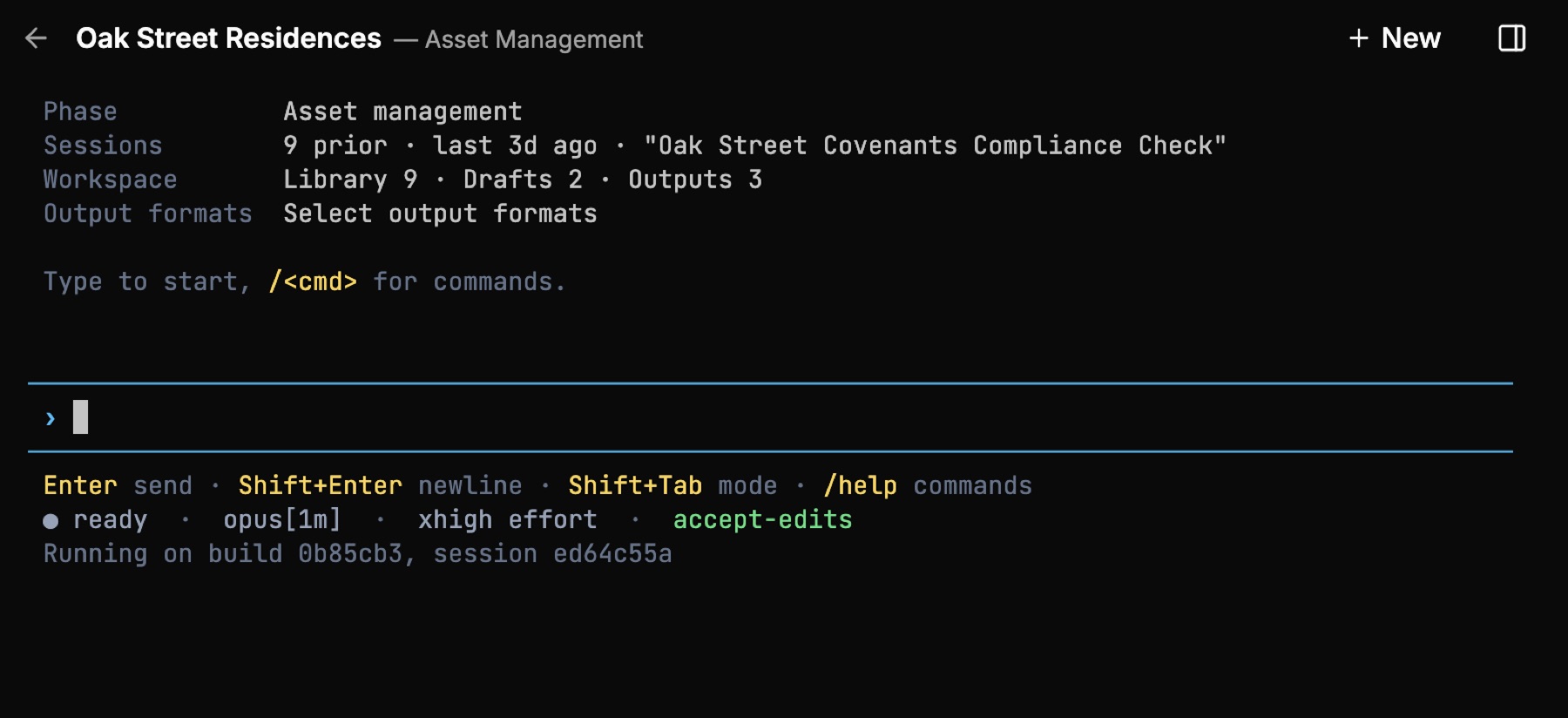
Fig · The recommendation, on the first line
02 · Drawn from the deal’s own files
The deal’s own evidence, on the page.
- The draft draws on your model and offering memo. It reads the appraisal and comps, sponsor materials, and deal briefing.
- Every figure comes from the model’s computed cells and is footnoted to its source. The model’s tables go in as exhibits, never re-typed, never pasted as screenshots.
- Update the model and the next draft carries the current numbers. The prose and the workbook stay in step through every revision.
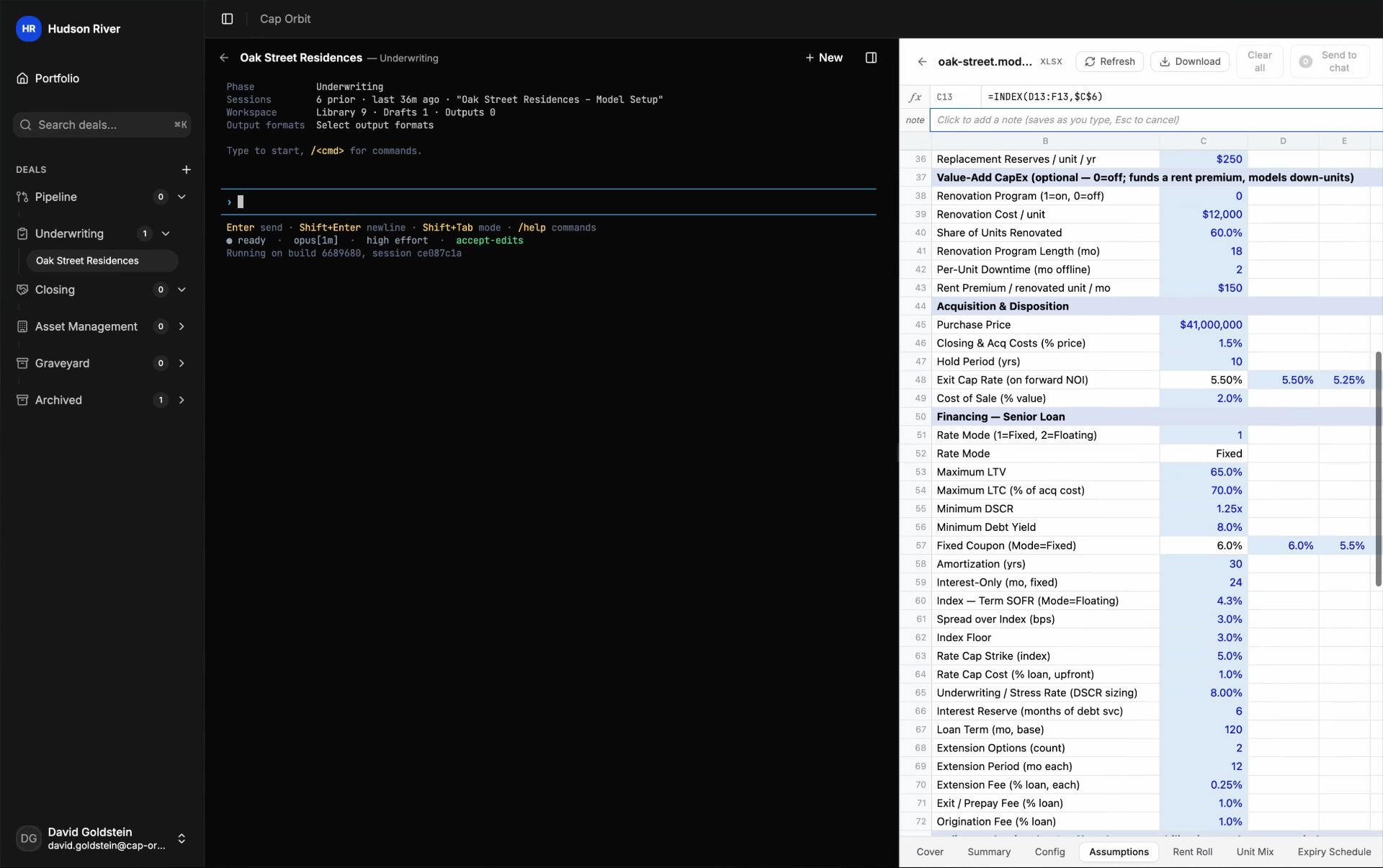
Fig · The numbers pulled straight from the model
How an IC or credit memo is written
Approve the argument before the draft is written.
The committee and credit memos are planned under review. The screening note goes straight to the two-pager: speed is the point.
- 01
01
Read the deal
The model’s returns, the diligence, the loan terms, and the deal briefing are read. The memo takes what it needs and leaves the workbook intact.
- 02
02
Present the outline
The outline comes first, section by section, in plain analyst language. Every open figure is flagged.
- 03
03
You approve or redirect
Redirect the recommendation, the emphasis, or the section logic while the argument is still easy to reshape. Ask the VP, and a senior reviewer weighs the argument at the decision points.
- 04
04
The full memo, drafted
Only then is the full memo written, in your house format, every risk paired with its mitigant. Send it for review and the terminal comes back with its objections. The fixes are yours to make.
The memo carries the recommendation. Your committee makes the decision.
Cap Orbit drafts in your analyst’s voice. Your team sets the price, weighs the credit risk, and owns the recommendation and investment decision.
You approve the outline
For IC and credit memos, the argument comes first for review. The screening note skips straight to the two-pager.
Every figure is sourced
A figure the documents do not contain is flagged for your input. Every number in the final memo traces to a cell or a cited document.
Make the draft your own
The memo opens ready to type. Mark it up yourself, in the document, with the team’s comments beside it. Every change is tracked under your name. Accept or reject in Cap Orbit, or later in Word. Mention the terminal in a comment and the reply lands in the thread.
The house voice
Familiar to everyone at the table.
The memo follows the firm’s section order, recommendation placement, exhibit style, units, number formats, and risk language. Figures use institutional convention: $336.2m in prose, psf as the unit, spreads in bps.
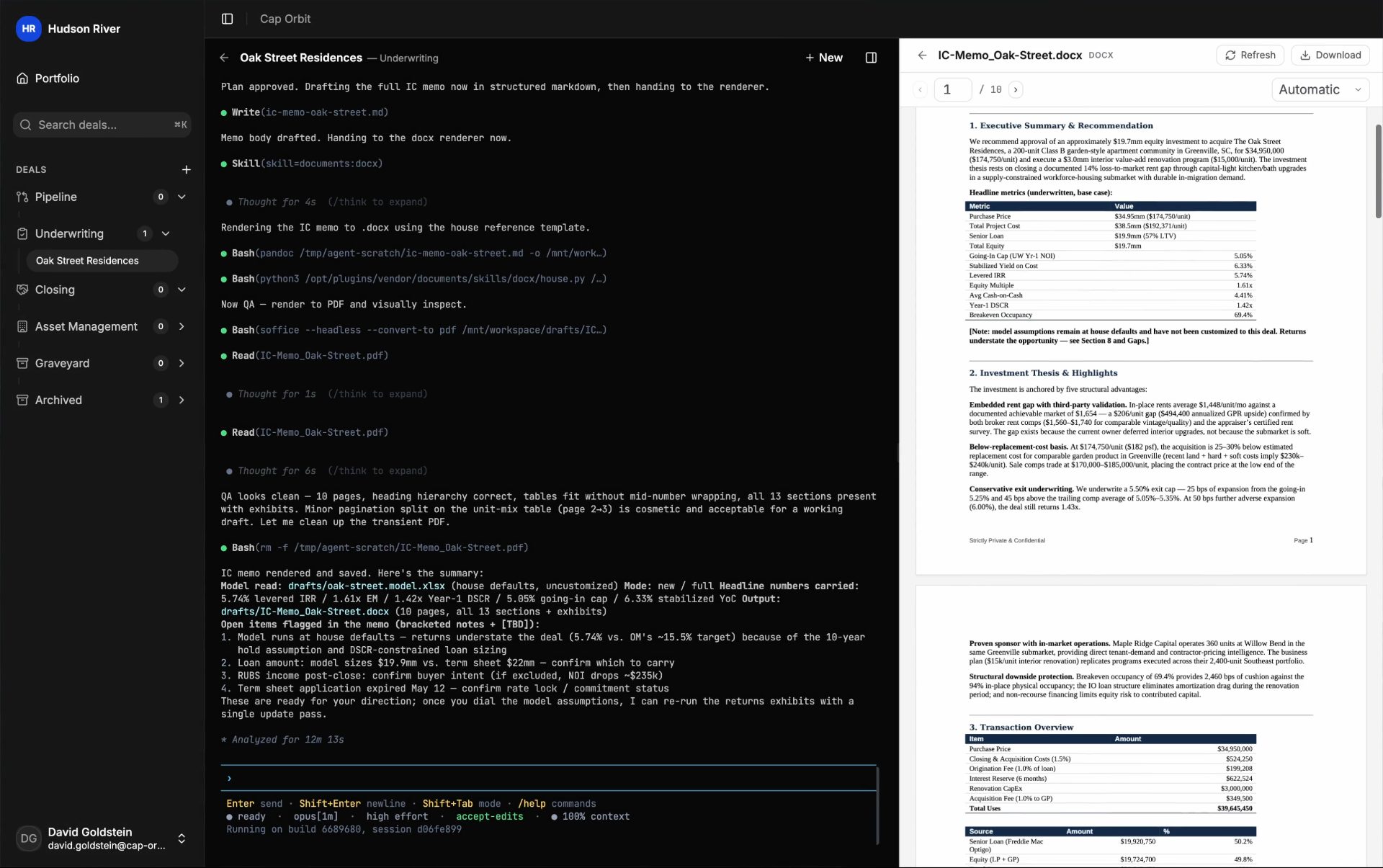
Fig · The IC memo, in the firm’s format
03 · Match my house style
Show it how your firm writes.
- Ask it to match your house style and it studies your filed memos, then writes in that voice.
- Share more filed memos for a closer match. The draft follows your section order and tone, right down to exhibits and number formats.
- Refresh an existing memo with the latest model numbers. Your prose stays, and material changes in figures are flagged. Edits are tracked under your name for you to accept or reject. Rewrite a single section in place, or compare two Word versions in one tracked-changes document.
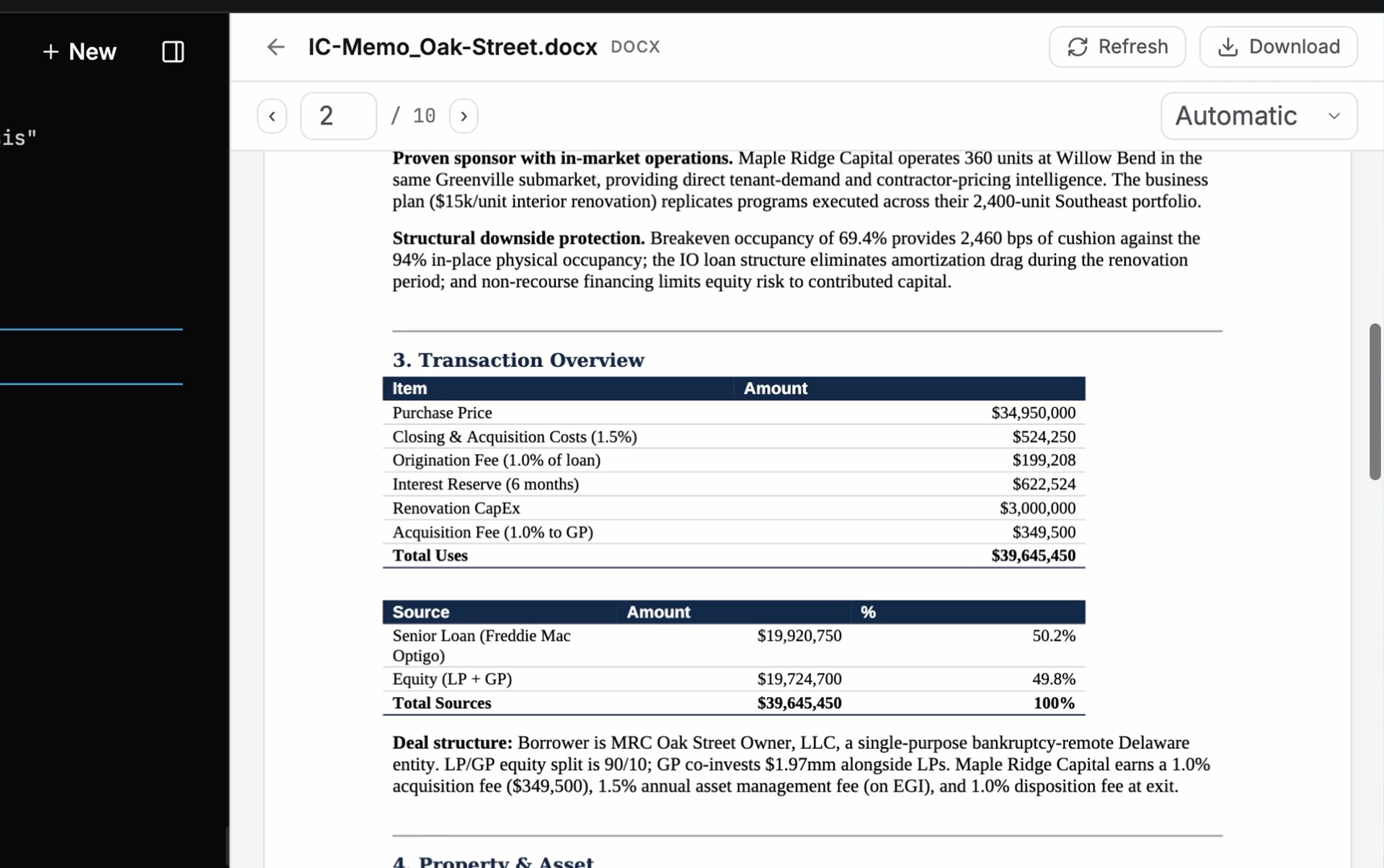
Fig · Your filed memos, studied for format and voice