Build a credit case you can stand behind.
Start with the borrower file. Trace the figures to their sources, then size and stress the debt. Draft the credit memo in your firm’s voice, with the downside up front.
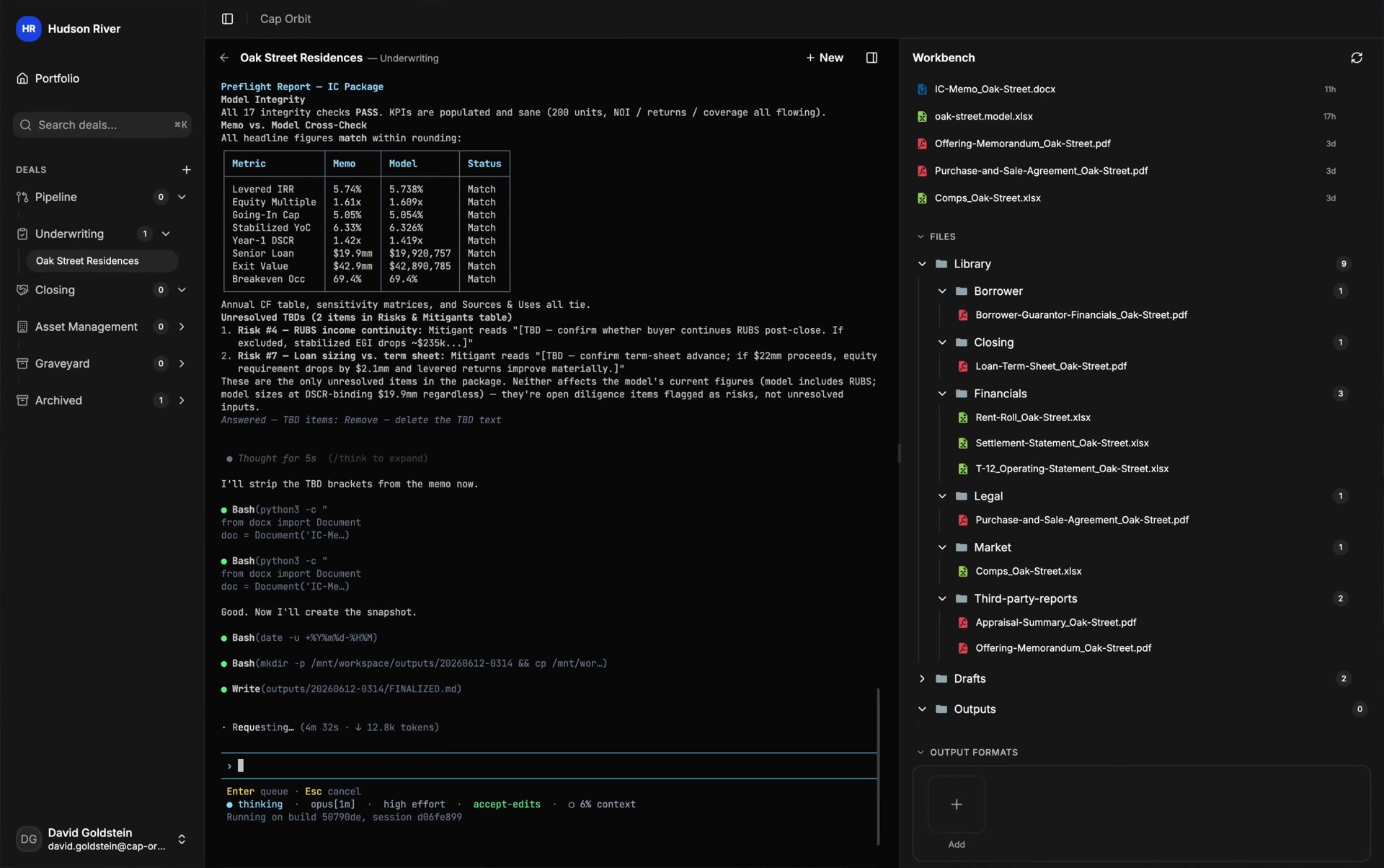
The credit team’s day
From borrower files to the credit committee.
The analyst directs each step: the file read, the debt sizing, the downside stress, and the memo that goes to committee.
- 01
01
Read the borrower file clean
Extract the rent roll and normalize the operating statement with a standard NOI bridge. Separate below-the-line items. Put diligence flags in front of the analyst.
- 02
02
Set the debt terms
Use a filed term sheet or clearly labeled assumptions to model debt before a quote arrives. Set the rate, debt limits, and term. Include interest-only and amortization periods, floors, caps, and fees.
- 03
03
Size and stress
Size the loan to the binding constraint and read the coverage year by year, the breakeven occupancy, and the downside scenario, with a sensitivity grid that flexes returns against exit cap and exit NOI.
- 04
04
Draft the credit memo
Approve a section-by-section outline first. Then the memo is drafted downside-first, every figure traced to the model or a cited source, and any missing number left as a flagged blank for your call.
01 · Size and stress the debt
One model. A clear view of the downside.
- Size the loan to the lowest amount allowed by LTV, LTC, DSCR, and debt-yield constraints. You set the house limits. For example: 65% maximum LTV and 70% maximum LTC, with minimums of 1.25x DSCR and 8% debt yield.
- Read NOI and debt service year by year, with DSCR, debt yield, and cash-on-cash. See the breakeven occupancy needed to cover operating costs and debt service.
- Every model carries Base, Upside, and Downside on one switch, so the downside re-prices against the same workbook. The underwriter and the credit officer work that workbook at the same time, each other’s cursors in view. The terminal’s changes arrive as revisions they can see and undo.
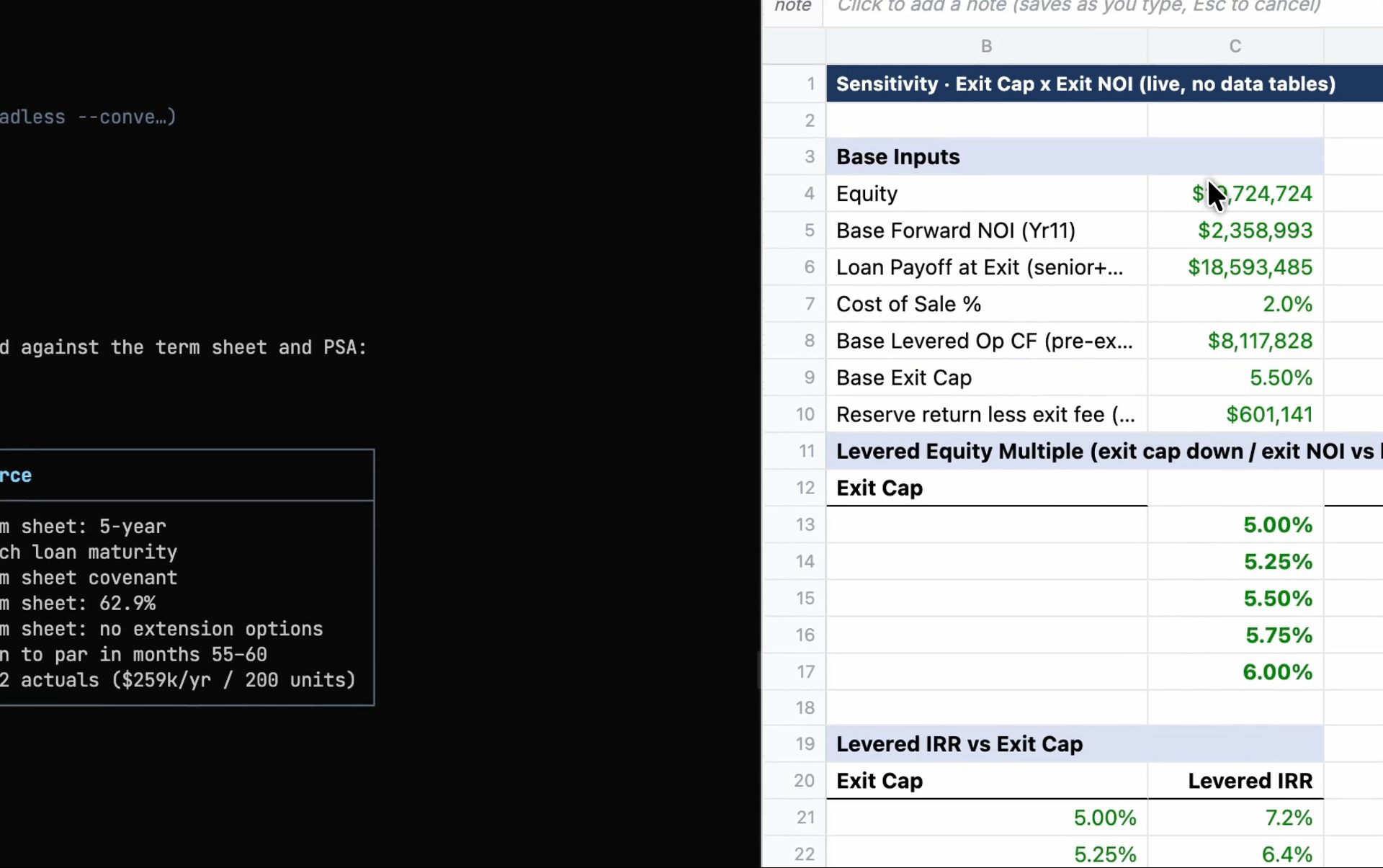
Fig · The debt sized to the binding test, stressed in place
02 · The credit memo, downside-first
The lender memo, built from the borrower file and the model.
- Draft from the loan terms, borrower file, and credit underwrite. Open with the borrower and facility, amount, rate, and term. Set out LTV, DSCR, and debt yield before the supporting case.
- Lead with annual DSCR and debt yield. Compare operations and examine sensitivities and downside. Set out the capital stack, borrower net worth and liquidity, and collateral.
- A regulated bank can add a proposed ratings section for internal PD, expected loss, and risk class. The memo opens ready to type. Your edits show as tracked changes, with the credit officer’s comments beside them. Ask the terminal to read it back and it raises what a lender would.
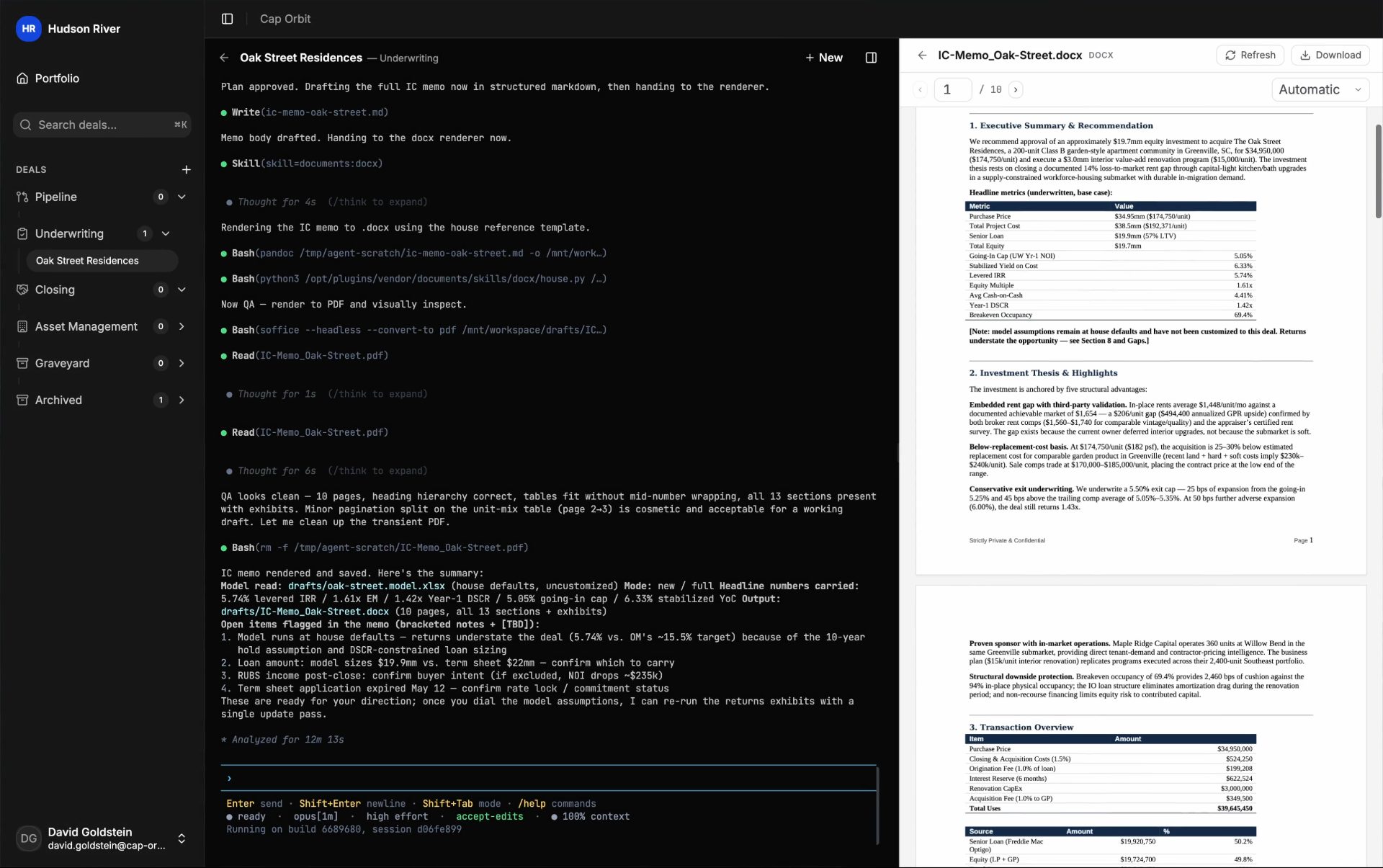
Fig · The credit memo, drafted in your house format
03 · Carry covenant standing through the hold
The same file tracks performance after it funds.
- Covenant terms are read straight from the loan agreement and its amendments and tested against the model’s current metrics on each covenant’s stated basis, trailing-twelve or otherwise, into a compliance report.
- Each test states what trips it and the consequence: a cash trap or sweep, blocked distributions, technical default, or springing recourse, plus the cure path, every line cited to its loan-agreement section.
- You review and sign off on the full schedule before it becomes the reference of record.
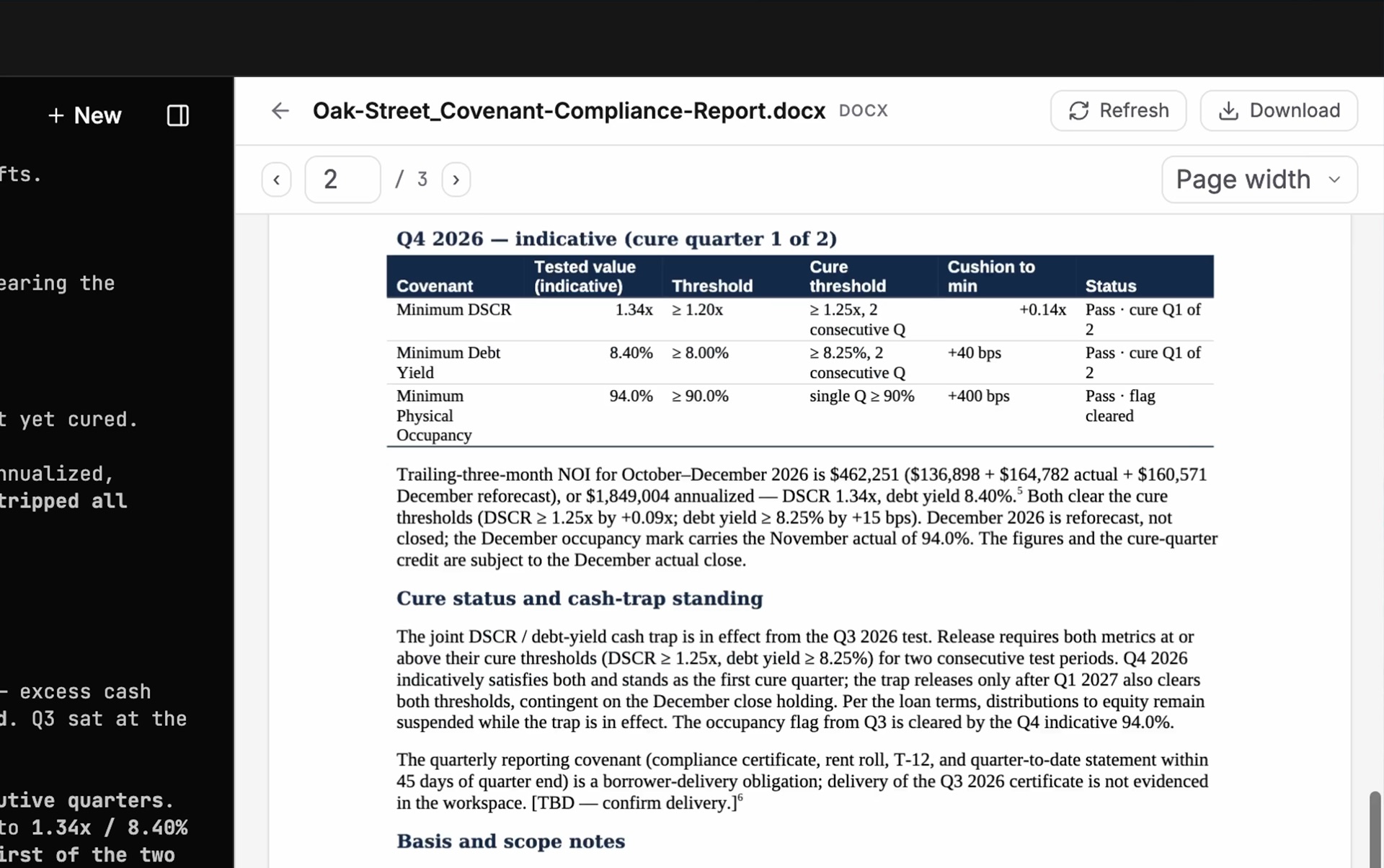
Fig · The covenant test against the loan terms and the live model
A supported credit view. Your decision.
Cap Orbit builds the numbers, runs the stresses, and drafts the memo. Your analyst directs and signs off on the work. Your team decides whether to approve or decline.
Assumptions are labeled until a term sheet is filed
Debt terms and the exit cap run as house assumptions, each one labeled assumed, until a real term sheet is on file.
The covenant schedule is yours to sign off on
The covenant check reads the loan agreement and the model. The compliance schedule is presented for your review before it stands as the reference of record.
Your firm’s credit recommendation
The memo is drafted in your house style and voice, with the credit recommendation left for your team to own.
Go deeper